Classic Filipino Kakanin Sampler
 Recipe Guy
Filipino | Desserts | Kakanin
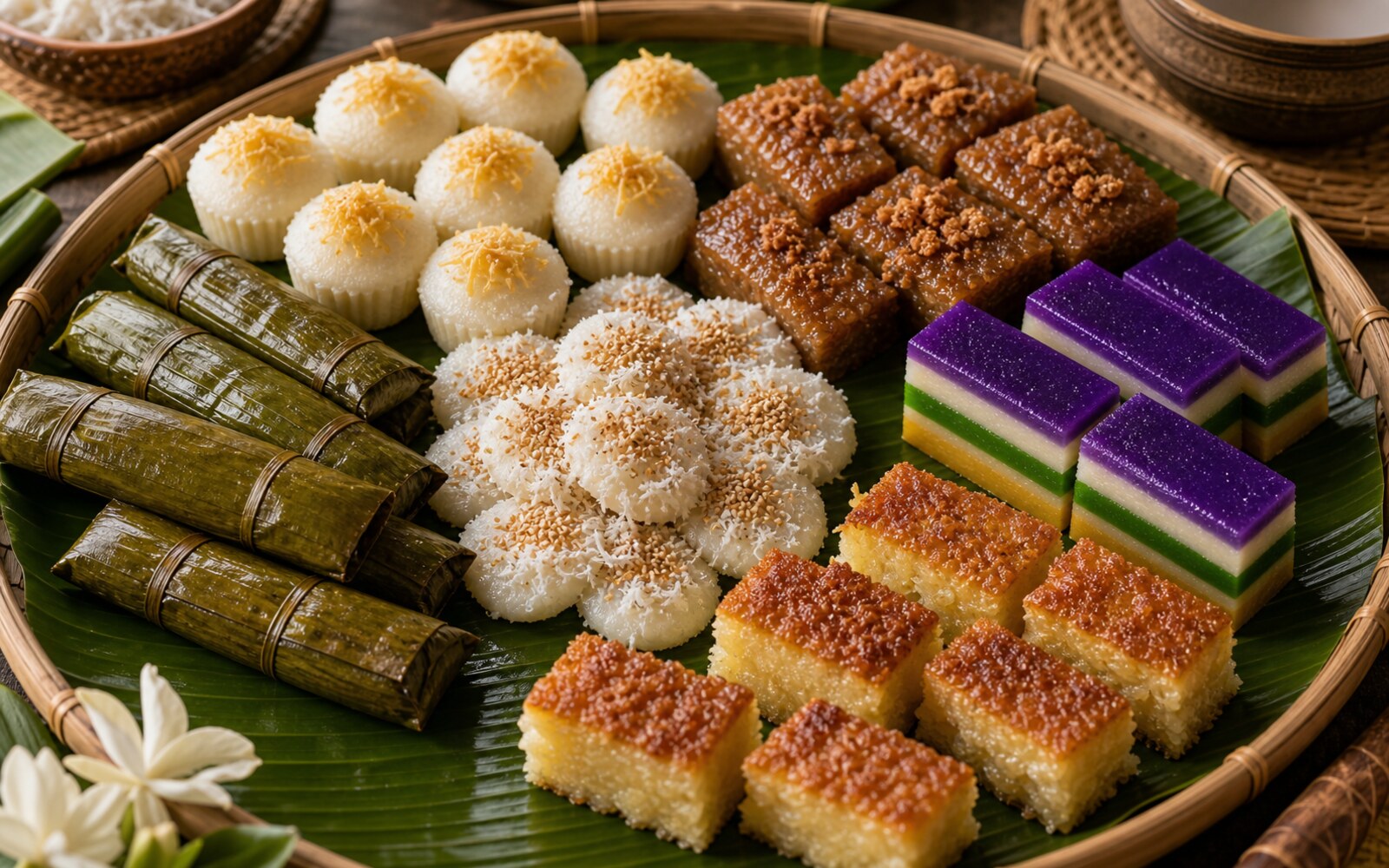
A kakanin sampler is a collection of separate preparations, not a single batter divided into shapes. This guide brings together puto, biko-style rice, palitaw, sapin-sapin, suman, and cassava cake, with coconut and sweet rice connecting their different textures.
About This Guide
Whole glutinous rice, glutinous rice flour, ordinary rice flour, and grated cassava each have a different job. Whole rice supplies the grain texture for biko-style squares and suman, while the palitaw dough starts with glutinous rice flour. Keep these bases separate during planning and measuring.
A manageable tray begins with the six complete recipes linked below. Choose the ones you want, then shop and measure for each separately. Keep their full cooking formulas and pan sizes; cut the cooked sweets into smaller tasting portions afterward. Coconut, latik, and cheese belong to the component recipes that call for them, not to a shared batter.
Cooking Notes
- Label the rice flour and glutinous rice flour before setting out bowls. Their similar appearance makes them easy to confuse, but the sampler assigns them to different preparations.
- Let the sliceable sweets set before cutting small portions for the tray. Plate the separate preparations together only after portioning, so their toppings and textures stay distinct.
Ingredient Notes
Kakanin
These sweets share rice, coconut, and sugar but use different techniques.
Equipment
Set out the equipment required by each chosen recipe: molds for puto, a pan and steamer for sapin-sapin, a pot for suman, a wide pan for biko, a boiling pot for palitaw, and an oven and baking pan for cassava cake.
Classic Filipino Kakanin Sampler Guide
Six separate sweets for one tray. Each link below opens a complete recipe with its own measurements, equipment, cooking steps, and yield. These are full component batches, not six fractions of a common mixture.
Shopping List
- For puto: use the flour, milk, leavener, sweetener, and cheese specified in its recipe; do not substitute glutinous rice flour.
- For biko and suman: whole glutinous rice, coconut milk, and the separate sweeteners and seasonings in each recipe; suman also needs banana-leaf wrappers.
- For palitaw and sapin-sapin: buy their specified rice flours separately; include palitaw's coconut, sesame, and sugar and sapin-sapin's milk, colors or flavorings, and topping.
- For cassava cake: reputable commercially prepared grated cassava intended for cake, plus the exact milks, eggs, and other ingredients in that recipe. Follow the product's required cooking instructions; do not substitute untreated fresh root.
- Include each recipe's measured cooking water and greasing ingredients, plus water for its steamer or boiling pot. Add together like ingredients only after recording all selected component amounts.
Six Complete Component Recipes
- Puto: Puto Cheese, individually steamed cakes. Use its specified molds, fill level, and batch timing.
- Biko-style rice squares: Biko with Coconut Caramel, whole sticky rice finished in coconut syrup. Follow its reduction endpoint before pressing into the specified pan.
- Palitaw: Palitaw with Coconut and Sesame, flattened rice-flour dough boiled in batches. Follow its water-to-flour ratio and cooking endpoint before coating.
- Sapin-sapin: Sapin-Sapin, three separately measured flavored layers. Use its pan dimensions and set each layer before adding the next.
- Suman: Suman Malagkit, coconut sticky rice enclosed in banana leaves. Use its wrapper preparation, filling quantity, water level, and cooking time.
- Cassava cake: Cassava Cake, a baked coconut-cassava base with a cooked topping. Use its stated baking pan, temperature, and doneness instructions along with the commercial cassava product's directions.
Tray Assembly
- Select your component recipes and make a separate ingredient checklist for each. Check that the pans and molds fit your steamer or oven before mixing.
- Make the sliceable biko, sapin-sapin, and cassava cake early enough to cool and set. Refrigerate promptly in shallow containers; do not leave a large tray out all afternoon to cool.
- Cook suman in its own wrappers and liquid; prepare puto and palitaw in separate batches using their linked methods. Do not turn a shortened sampler description into a cooking formula.
- Cut fully cooked, set sweets into tasting portions. A 24-piece display could contain four finished portions of each sweet, but that is a plating suggestion, not the yield of these combined recipes. Store extra pieces separately.
- Arrange shortly before serving with each component's own topping. Keep reserve portions refrigerated at 40 F or below and replenish the tray in small batches.
Nutrition By Component
This is a collection of alternatives, not one combined recipe. A single calorie or nutrient total would be misleading. Use the ingredient quantities, yield and nutrition estimate for the individual recipe you choose; its estimate does not include every variation, optional topping, sauce or side dish. Recipe-specific references: Puto Cheese; Biko with Coconut Caramel; Palitaw with Coconut and Sesame; Sapin-Sapin; Suman Malagkit; Cassava Cake.
Tips For The Best Classic Filipino Kakanin Sampler
- Plan by method: Schedule steamer batches together, but use each recipe's own molds, water level, and cooking endpoint.
- Banana leaves: Buy and prepare the wrappers required by the suman recipe; decorative tray liners are optional and are not a substitute for proper wrappers.
- Cool before slicing: Sticky desserts need time to firm.
- Make toppings ahead: Follow the topping directions in the chosen component recipe and refrigerate covered until needed.
How To Serve And Store
Serve as a merienda tray, keeping individual sweets separate until plating. Refrigerate cooked components in shallow covered containers within 2 hours, or 1 hour above 90 F, at 40 F or below. Use the shortest storage period among your chosen recipes, no more than 3 days for an assembled mixed tray. Transport in an insulated cooler with ice packs; do not count car travel as refrigerated time.
Common Questions
Where are the complete recipes?
All six are linked in the component list above. Open each chosen recipe for its measured ingredients and cooking instructions; this page organizes the tray rather than replacing those formulas.
Can I use canned coconut milk?
Yes, when the chosen component recipe calls for it. Match its specified amount and type; cans vary in size, and coconut milk is not interchangeable with sweetened cream of coconut.
Which is easiest to start with?
Palitaw has a short boiled-dough method, while puto needs individual molds and steaming batches. Both complete recipes are linked above.
Which travels best?
Set biko and cassava cake portions and wrapped suman are convenient to pack, but all still need cold transport. Keep the pieces in separate covered containers and assemble the tray at the destination.
Can I mix everything into one batter?
No. These are six different recipes using whole rice, different flours, or cassava. Shop and measure for each component independently.
Does this guide make exactly 24 pieces?
No combined batch yield is claimed. Four finished tasting portions of each sweet make a 24-piece display; the linked recipes make their own stated batches, so you may have extra portions.
Technique and food-safety references: kawalingpinoy.com; kawalingpinoy.com; ask.fsis.usda.gov; foodstandards.gov.au.