Biko Six Ways
 Recipe Guy
Filipino | Desserts | Kakanin
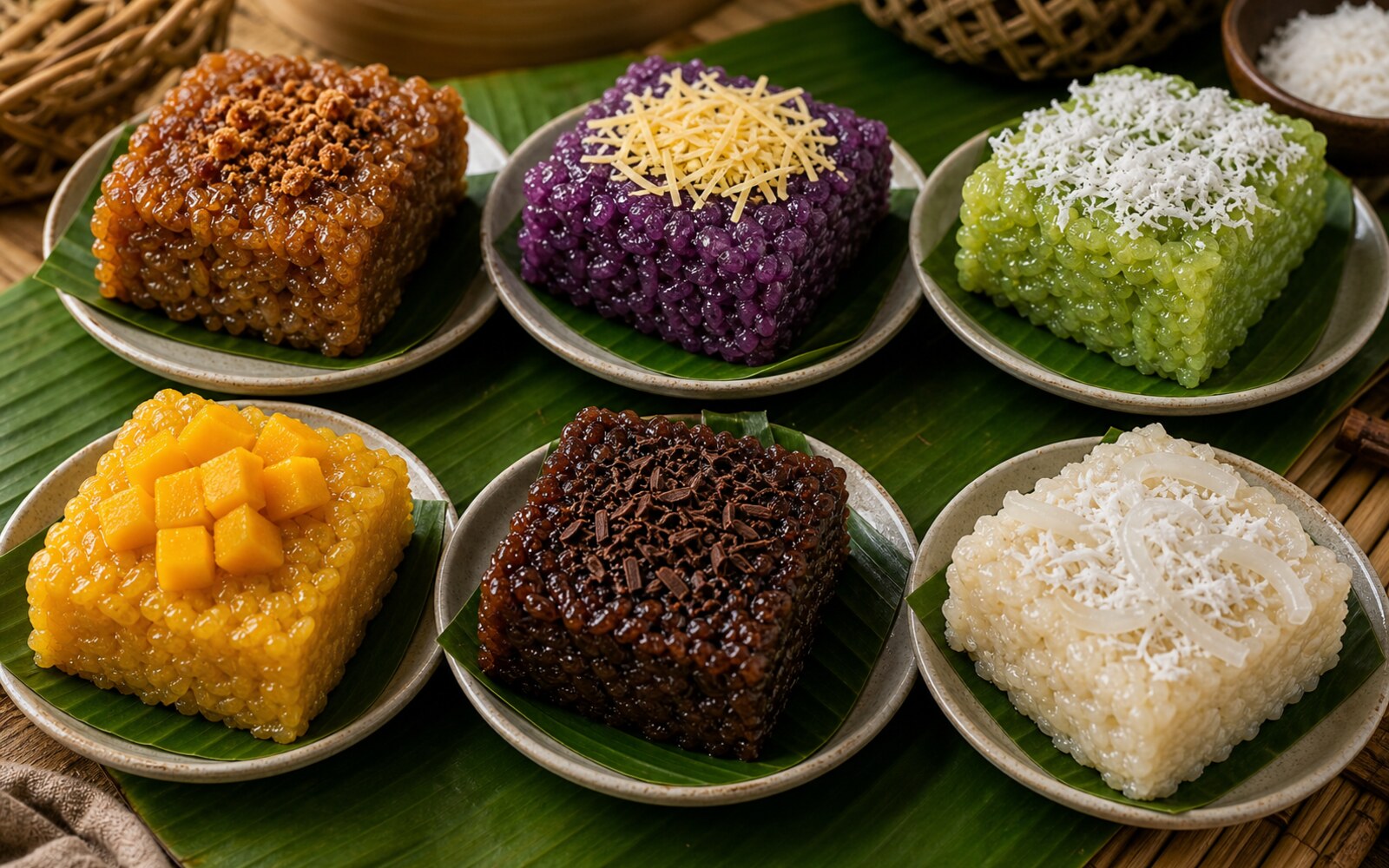
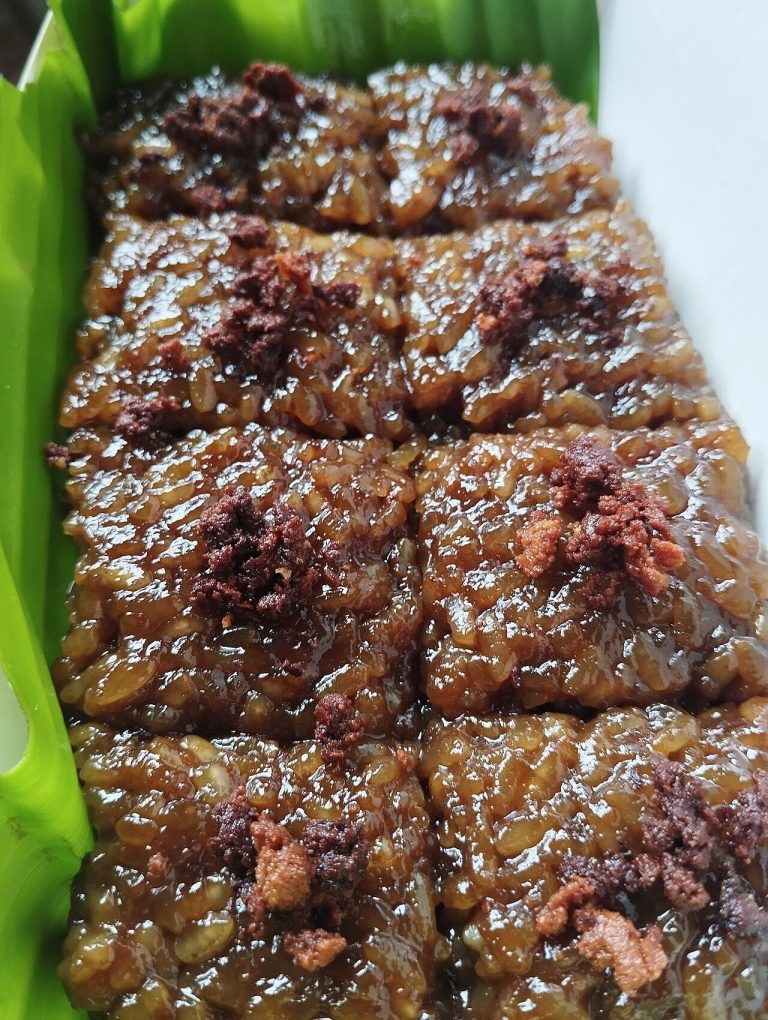
The starting point for this biko guide is chewy glutinous rice folded into brown-sugar coconut syrup. Ube, buko pandan, mango, chocolate, and macapuno are alternative additions to that base, each changing the finished rice cake in its own way.
About This Recipe
Cook the rice until just tender before it meets the syrup. The next stage brings the two together over heat until the grains form a sticky, cohesive mixture. Coconut milk, brown sugar, salt, and vanilla establish the base before any variation is considered.
These are six alternatives for one full rice-cake batch. Choose one and use its listed amount with all 2 cups of dry rice. Puree and halaya enter the syrup before the rice; all versions must cook until the mixture holds together without a pool of liquid.
Cooking Notes
- Keep scraping the bottom as the rice thickens in the coconut syrup. Fold the mixture over itself so all the grains become coated without leaving a sugary layer stuck underneath.
- Line the serving pan before the rice reaches its thickest stage. Transfer and smooth the hot mixture promptly, then let it cool before trying to cut even portions.
Ingredient Notes
Rice
Cook the rice slightly firm because it keeps absorbing syrup.
Coconut syrup
The syrup should be glossy before the rice goes in.
Biko Six Ways Recipe
A sticky rice cake guide with classic coconut-caramel biko plus ube, buko pandan, mango, chocolate, and macapuno versions.
Shopping List
- glutinous rice
- coconut milk
- prepared latik curds, only if choosing that topping
- brown sugar
- salt
- vanilla
- ube halaya
- pandan extract
- buko strips
- mango
- cocoa
- macapuno
- latik
- cheese
Ingredients
Base Biko
- 2 cups glutinous rice
- 2 cups water
- 2 cups coconut milk
- 1 1/2 cups brown sugar
- 1/2 teaspoon salt
- 1 teaspoon vanilla
Variation Add-Ins
Choose none for classic or just one variation for the whole batch below. Each amount is for all 2 cups dry rice and twelve finished pieces; do not combine the list or divide a cooked batch into unspecified portions.
- Ube, full batch: 1/2 cup ube halaya
- Buko pandan, full batch: 1 teaspoon pandan extract and 1/2 cup drained buko strips
- Mango, full batch: 1/2 cup smooth mango puree; cook into syrup before adding rice
- Chocolate, full batch: 1/4 cup unsweetened cocoa powder
- Macapuno, full batch: 1/2 cup macapuno strings, measured after draining syrup
Toppings
- 1/4 cup prepared latik curds, optional; choose only one topping
- 1/4 cup grated cheese, optional instead of latik
- 1/4 cup toasted coconut, optional instead of latik
- One cleaned, softened banana-leaf piece or parchment to line an 8 by 8 by 2-inch pan
Variation Paths
- Classic
- Ube
- Buko Pandan
- Mango
- Chocolate
- Macapuno
Instructions
- Choose classic or one full-batch variation. Line an 8 by 8 by 2-inch pan with parchment or a cleaned, softened banana leaf. Rinse and drain the rice well.
- Combine rice and the 2 cups water in a covered pot. Bring to a boil, lower the heat and simmer gently about 15 to 20 minutes until the water is absorbed and the rice is just tender. Rest covered 10 minutes. A rice cooker can handle this stage.
- In a wide heavy nonstick pan, combine the 2 cups coconut milk, brown sugar, salt, and vanilla. For ube, whisk the halaya in now. For chocolate, first make a paste with the cocoa and a little of the measured coconut milk, then add it. For buko pandan, add the extract and drained buko now.
- Simmer over medium-low heat about 10 to 15 minutes, stirring, until glossy and slightly reduced. For mango, stir the 1/2 cup puree into this syrup now and simmer about 5 to 10 minutes longer until it thickens again. Do not add puree to already-finished biko.
- Fold all the cooked rice into the flavored or plain syrup. For macapuno, fold in the drained strings at this stage.
- Cook over medium-low heat, scraping and folding frequently, about 30 to 45 minutes or as needed until thick, sticky and cohesive, pulling away from the sides with no free liquid. For a set check, place a spoonful on a plate and let it cool briefly: it should hold a mound without leaking syrup. If loose, keep cooking the batch and check again.
- Transfer all the biko to the lined pan and smooth the top. Add 1/4 cup of one optional topping. Cool, refrigerating within 2 hours, and cut into twelve pieces once set.
Nutrition Estimate
This is a collection of alternatives, not one combined recipe. A single calorie or nutrient total would be misleading. Use the ingredient quantities, yield and nutrition estimate for the individual recipe you choose; its estimate does not include every variation, optional topping, sauce or side dish. The separate formulas above require separate calculations for their stated portions; no combined estimate is provided.
Tips For The Best Biko Six Ways
- Stir often: Sugar and coconut can scorch.
- Line the pan: Banana leaves or parchment make lifting easier.
- Cool fully: Biko slices cleaner when cool.
- Use concentrated flavors: Watery puree softens the set.
How To Serve And Store
Serve room temperature or slightly warm. Refrigerate covered.
Common Questions
Can I use a rice cooker?
Yes. Cook the rice first, then finish in coconut syrup.
Can I skip latik?
Yes, but it adds classic flavor.
Can I make it less sweet?
Reduce sugar to 1 cup.
How long does it keep?
Refrigerate up to 4 days.
Can I cook the glutinous rice in a rice cooker first?
Yes. The rice-cooking stage can be separate from the stovetop syrup. Stop at just tender, then fold the cooked rice into the coconut mixture and continue until the biko becomes thick and cohesive.
Do I add all five flavorings to one batch of biko?
No. Each listed flavor amount is for one entire batch made with 2 cups dry glutinous rice, yielding twelve pieces. Choose only one, or none for classic. Do not add every flavor or use a full-batch amount in a small divided portion.
Technique and food-safety references: kawalingpinoy.com; kawalingpinoy.com.