Pan de Coco: Filipino Coconut Buns
 Recipe Guy
Merienda and Bakery
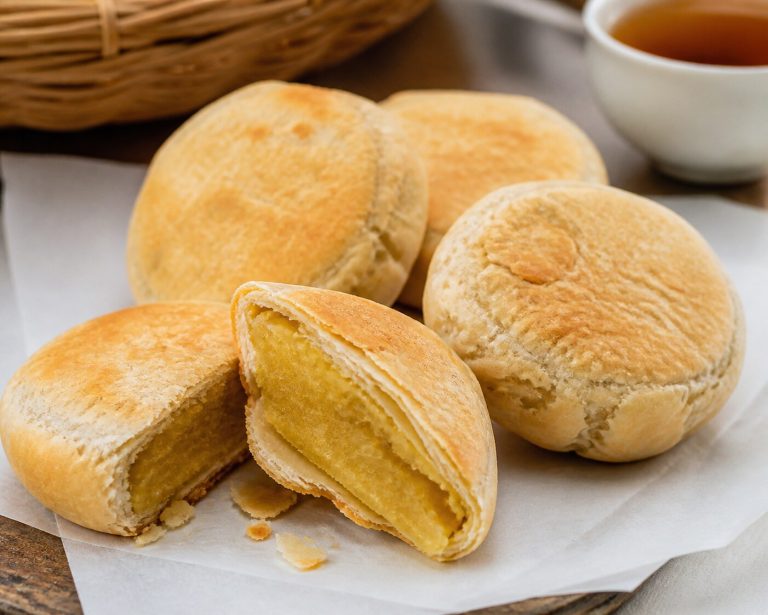
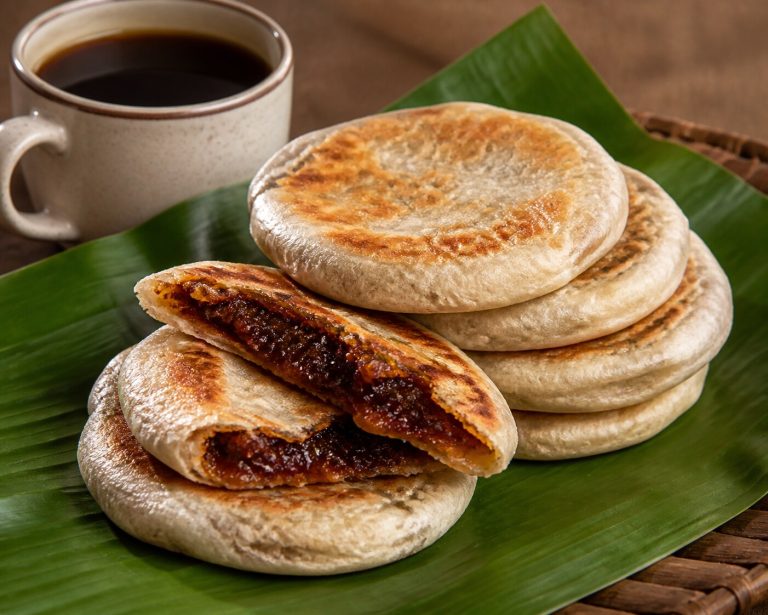
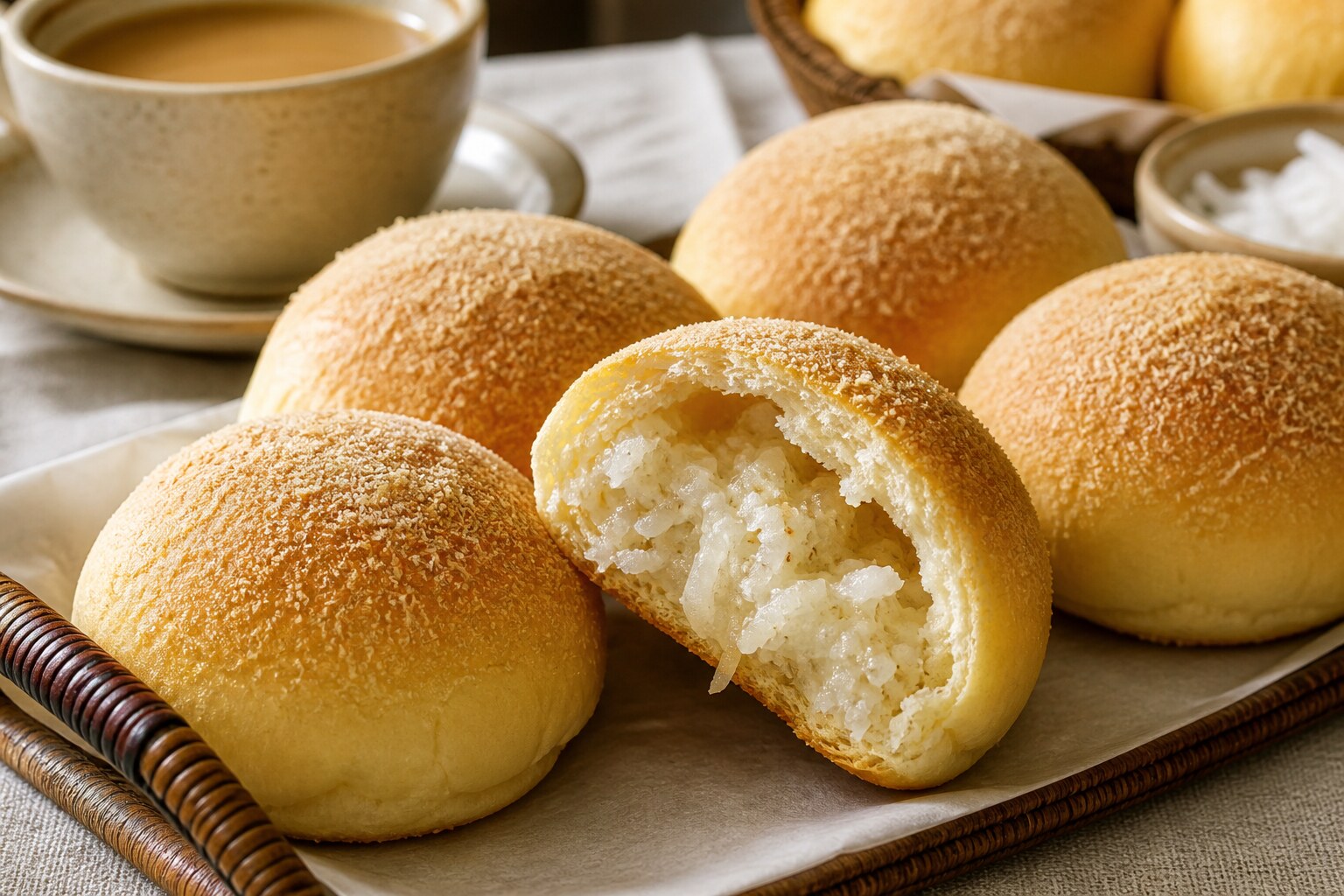
Pan de coco hides its sweetest part inside: grated coconut cooked with brown sugar, coconut milk, and butter until thick enough to spoon. The soft yeast dough wraps around that filling, with a glossy egg-washed top and optional fine breadcrumbs.
About This Recipe
Local name: Pan de Coco
Make the filling first so it has time to cool while the dough is mixed and risen. The coconut mixture should be moist but not runny; loose liquid makes shaping harder and is more likely to escape through the seams.
Each of the twelve dough portions needs enough room around its filling to pinch closed comfortably. Set the buns seam-side down for their second rise, then brush with egg wash before baking. Give them the stated cooling pause before eating so the warm filling is easier to handle.
Ingredient Notes
Bread flour
Bread flour gives the buns chew and structure, but all-purpose flour works for a softer bakery-style crumb.
Coconut
Fresh or frozen grated coconut is best. Unsweetened shredded coconut can work if simmered until tender.
Brown sugar
Brown sugar gives the filling a caramel note without making it grainy.
Milk and butter
Warm milk and butter enrich the dough so the buns stay soft the next day.
Cooking Notes
- Keep a clean border around the coconut filling when shaping each round. Sugar and butter smeared along the edge can keep the dough from pinching into a firm seal.
- Divide the dough into equal pieces before flattening any of them. Matching portions help the buns rise and brown at a similar pace while leaving room for consistent filling amounts.
Pan de Coco: Filipino Coconut Buns Recipe
Pan de coco is a soft Filipino bakery bun filled with sweet, buttery coconut that stays moist after baking.
Yield: 12 buns Serving size: 1 bun
Yield note: The filling should be thick and spoonable, not wet, before shaping.
Shopping List
Bakery Staples
- Flour
- Instant yeast
- Sugar
- Milk
- Butter
- Egg
Filling
- Grated coconut
- Brown sugar
- Coconut milk
- Vanilla
Finish
- Egg for egg wash
- Fine breadcrumbs, optional
Ingredients
Dough
- 3 1/2 cups bread flour or all-purpose flour
- 1/4 cup sugar
- 2 1/4 teaspoons instant yeast
- 1 teaspoon kosher salt
- 3/4 cup warm milk
- 1 large egg
- 4 tablespoons unsalted butter, softened
Coconut Filling
- 2 cups grated coconut
- 3/4 cup brown sugar
- 1/2 cup coconut milk
- 2 tablespoons unsalted butter
- 1/2 teaspoon vanilla
- Pinch of salt
Finish
- 1 egg beaten with 1 tablespoon milk
- 2 tablespoons fine breadcrumbs, optional
Instructions
- Cook coconut, brown sugar, coconut milk, butter, vanilla, and salt in a skillet over medium heat until thick and glossy, 8 to 10 minutes. Cool completely.
- Mix flour, sugar, yeast, and salt in a bowl.
- Add warm milk and egg. Mix until a shaggy dough forms.
- Knead in softened butter, then knead 8 to 10 minutes until smooth and elastic.
- Cover and let rise 60 to 75 minutes, until doubled.
- Divide dough into 12 pieces. Flatten each piece into a round.
- Place about 2 tablespoons coconut filling in the center, pinch closed, and place seam-side down.
- Cover and rise 35 to 45 minutes until puffy.
- Heat oven to 350 F. Brush buns with egg wash and sprinkle with breadcrumbs if using.
- Bake 16 to 18 minutes until golden. Cool at least 10 minutes before eating.
Nutrition Estimate
Estimated per bun using enriched dough and coconut-brown sugar filling.
Tips For The Best Pan de Coco: Filipino Coconut Buns
- Cool the filling: Warm filling melts the dough and causes leaks.
- Seal tightly: Pinch the dough closed well and bake seam-side down.
- Do not overflour: A slightly tacky dough bakes softer.
- Warm before serving: Ten seconds in the microwave revives next-day buns.
How To Serve And Store
Serving: Serve warm with coffee, tea, or hot chocolate.
Make Ahead: Make the filling up to 3 days ahead.
Refrigerate: Refrigerate filled buns for up to 4 days.
Freeze: Freeze baked buns for up to 2 months.
Reheat: Warm briefly in the microwave or low oven.
Safety: Cool perishable leftovers within 2 hours and reheat cooked foods to steaming hot before serving again.
Common Questions
Can I use dried coconut?
Yes, but simmer it longer with coconut milk so it softens.
Why did my filling leak?
The filling was likely too wet or the seam was not sealed tightly.
Can I make the dough by hand?
Yes. Knead until smooth and stretchy, about 10 minutes.
Can I reduce the sugar?
You can reduce the filling sugar slightly, but the coconut needs enough sugar to stay moist.
Why does coconut filling leak from my buns?
Check that the filling has cooked down until thick and cooled completely before shaping. Avoid overfilling, pinch clean dough edges together firmly, and place that sealed side underneath on the baking tray.
Should I add more flour whenever the dough feels slightly sticky?
Not automatically. Keep kneading toward the smooth, elastic texture described, and use only enough flour for handling. A slightly tacky dough is different from one that cannot hold its shape at all.