Pandan Filipino Desserts Six Ways
 Recipe Guy
Filipino | Desserts | Kakanin
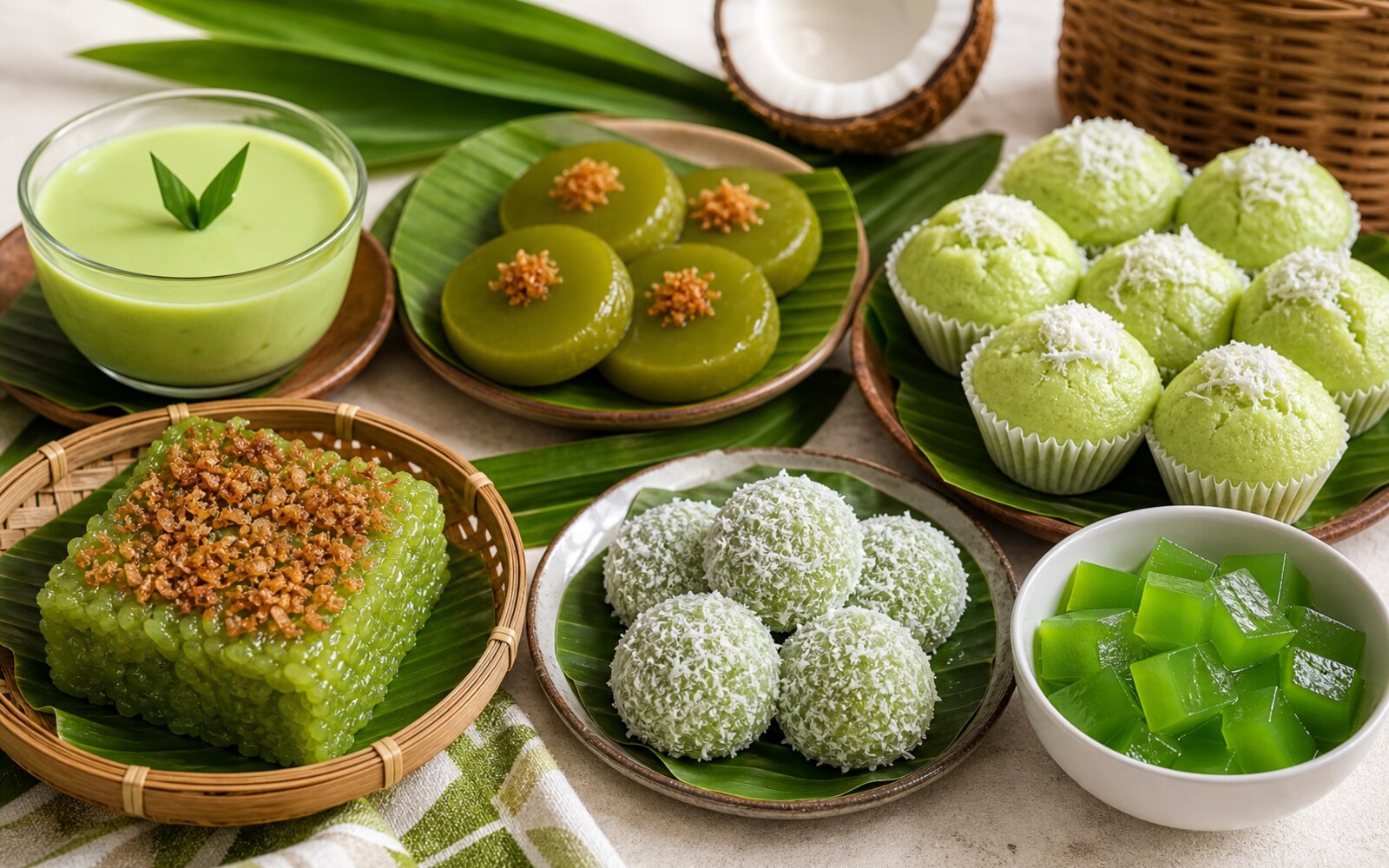
Pandan links this dessert guide through aroma, while sticky rice, rice-flour cakes, and jelly supply different textures. Think of it as a sampler-planning guide, not one batter to divide six ways. Coconut milk, grated coconut, and latik have distinct jobs across the separate preparations.
About This Recipe
Whole glutinous rice is the starting point for biko, while palitaw uses glutinous rice flour. Puto formulas vary: the complete pandan-scented buttered puto linked below uses wheat flour. Kutsinta has a separate wheat-flour and tapioca-starch mixture. These ingredients should not be treated as one shared base.
Pandan jelly offers a cool contrast to the rice sweets, and young coconut strips, grated coconut, and latik provide different finishes. Plan each dessert separately before assembling tasting portions; a shared flavor does not make their liquid ratios or cooking methods interchangeable.
Cooking Notes
- Keep whole glutinous rice, glutinous rice flour, wheat flour and tapioca starch separately labeled. Measure each dessert's ingredients separately so its flour and liquid ratios stay intact.
- Hold the young coconut strips, grated coconut, and latik separately until plating. Each has a different texture, and keeping them apart lets the individual desserts retain that contrast.
Ingredient Notes
Pandan
Pandan leaves, strained fresh juice and concentrated extracts are not interchangeable measures. Follow the form and amount in each linked recipe; do not taste uncooked flour batter or raw egg custard to adjust the flavor.
Coconut
Coconut milk is the best partner for pandan in Filipino desserts.
Pandan Dessert Planning Guide
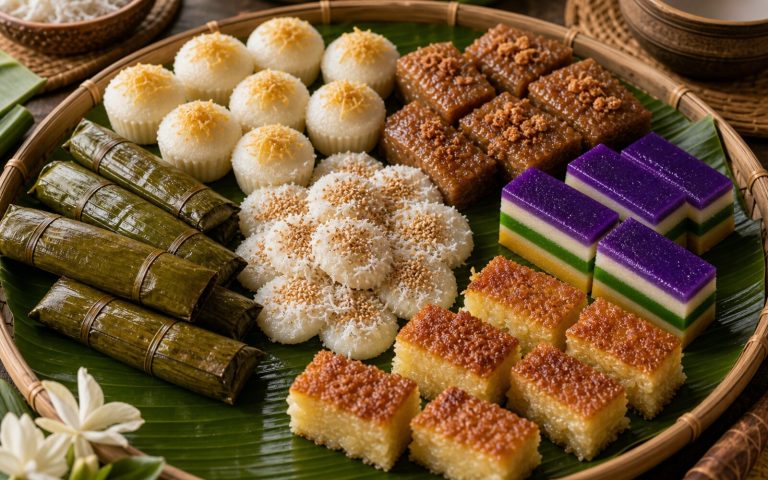
These six choices each link to a complete recipe with pandan included in the formula or a measured pandan option. Follow one recipe at a time, including its ingredient quantities, mold size, cooking method and yield. The tray is a serving suggestion, not a seventh recipe or one batch divided six ways.
Shopping List
- Open the linked recipe for each dessert you plan to make and shop its measured ingredients. There is no shared coconut-milk, sugar or flour total.
- Biko needs whole glutinous rice; palitaw needs glutinous rice flour. The linked puto uses wheat flour, and the kutsinta uses wheat flour plus tapioca starch. These are different bases.
- Buy fresh or frozen pandan leaves for the linked jelly, biko and custard recipes. The palitaw, puto and kutsinta formulas specify concentrated pandan flavoring instead; do not swap in an equal volume of pandan water.
- For the jelly route below, buy plain agar-agar powder, not sweetened pandan gelatin mix. Packet sizes and gelling strengths vary; a whole packet is not a unit of measure.
- Buy coconut milk, dairy, eggs, butter, cheese, grated coconut, sesame and toppings only as required by your chosen recipes. For kutsinta, use commercially prepared food-grade lye water intended for cooking, never homemade lye or a cleaning product.
Six Complete Recipe Choices
1. Pandan Jelly
Jackie's natural pandan jelly at Rice Life Foodie supplies both the leaf-extraction method and the agar jelly formula. Follow the agar version, measuring only the strained extract needed for the jelly; the extraction water is not all poured into the finished batch. Chill until firmly set before cutting.
2. Pandan Biko
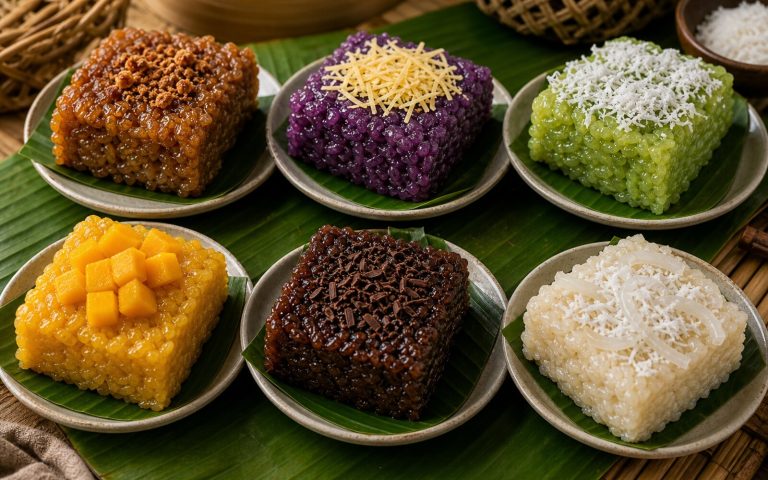
Bebs' biko at Foxy Folksy cooks the sticky rice with pandan leaves before combining it with coconut syrup. Use the recipe card's cup measures consistently, including its separately measured coconut milk for rice and syrup, rather than treating cans as measured cups. Its 8-inch square pan and baked coconut-caramel finish belong to that full recipe; cut tasting portions after the slab sets.
3. Pandan Palitaw
Adam Sobel's palitaw at Cinnamon Snail includes a measured pandan-extract option and instructions for dividing and coloring the dough. Use that pandan portion for this tray. The flattened glutinous-rice-flour cakes are boiled, drained and coated with coconut and sesame sugar; they are not steamed puto batter.
4. Pandan Puto
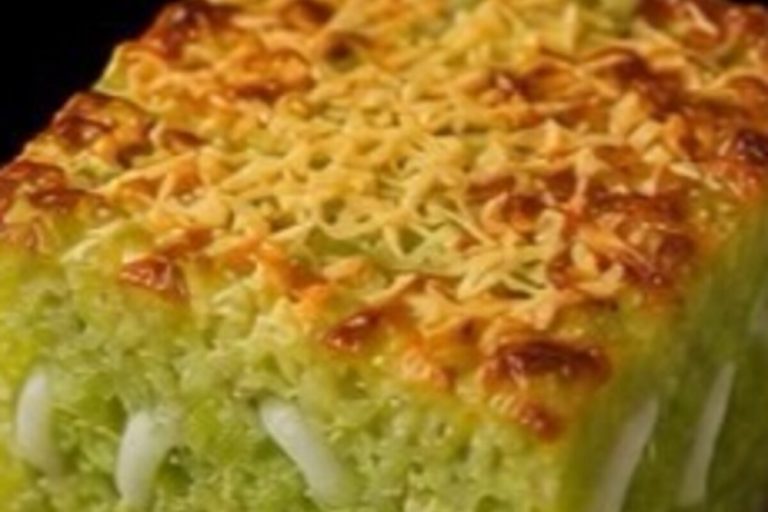
Vanjo Merano's buttered puto at Panlasang Pinoy includes pandan essence in its measured batter. This is a wheat-flour, butter, egg and evaporated-milk version, with cheese on top. Follow its individual-mold steaming method and cheese instructions; do not substitute the guide's former rice-flour mixture or assume the same time works for one large pan.
5. Pandan Custard
Tasting Table's coconut-pandan flan, adapted from Chomp Chomp, provides a complete individual-custard recipe with measured strained pandan juice, eggs, coconut milk, dairy and caramel. It is a restaurant adaptation, not a claim about one traditional Filipino leche flan formula. For headroom, divide its unchanged six-serving batch among six shallow 6-fluid-ounce ovenproof ramekins rather than filling 4-ounce cups to the rim. Start checking at the author's stated bake time; the centers must be set with a slight wobble and reach at least 160 F. Do not transfer this timing to a single large mold. Refrigerate within 2 hours of cooking, then chill fully before unmolding.
6. Pandan Kutsinta
Nora Rey's kutsinta at Recipes by Nora includes a measured pandan-extract choice, flour and tapioca starch, and food-grade lye water. Select pandan rather than vanilla. This version keeps its brown sugar and annatto, so pandan aroma does not mean a bright-green cake. Use its individual mold fill and steaming instructions, then cool before unmolding and adding grated coconut.
Plan the Tray
- Choose one or two of the linked recipes first and use each one's yield. Making all six creates six separate batches, not eighteen predetermined tasting servings.
- Make and chill jelly or custard ahead. Give biko time to set before slicing; prepare palitaw and steamed cakes nearer serving time. Do not shorten a full-size cake's cooking time merely because you will cut it into small servings.
- Keep young coconut strips, grated coconut and latik separate if you choose them as extra serving accompaniments. They are optional plating suggestions, not missing components of the six formulas above. Count added toppings separately in nutrition.
- Keep perishable desserts at 40 F or below until needed. Refrigerate promptly, even where an author's comments suggest overnight counter storage. Use within 3-4 days or the recipe's shorter limit; a mixed tray takes the shortest limit of its components.
Nutrition By Dessert
This is a collection of alternatives, not one combined recipe. A single calorie or nutrient total would be misleading. Use the ingredient quantities, yield and nutrition estimate for the individual recipe you choose; its estimate does not include every variation, optional topping, sauce or side dish. The separate formulas above require separate calculations for their stated portions; no combined estimate is provided.
Tips For The Best Pandan Filipino Desserts Six Ways
- Control condensation: For steamed cakes, secure any lid cloth with its ends well away from flames, burners and vents.
- Measure liquid: Too much liquid makes kakanin hard to slice.
- Cool before slicing: Sticky desserts firm as they cool.
- Use fresh coconut: Fresh grated coconut improves palitaw and puto.
How To Serve And Store
Serve one dessert or assemble small tasting portions from separately prepared batches. Refrigerate milk-, egg-, rice- and fresh-coconut desserts promptly; limit time above 40 F to 2 hours total, or 1 hour above 90 F. Use each component's own storage directions rather than treating the whole tray as one shelf-stable sweet.
Common Questions
Can I use fresh pandan leaves?
Yes. The jelly recipe and custard recipe above specify how to extract and measure the juice; the biko recipe uses leaves while cooking the rice. Follow the relevant method rather than adding extra pandan water to another batter.
Can I make this dairy-free?
Check the selected recipe. Custard commonly contains dairy and eggs, and puto or buko pandan may contain milk or cheese. Coconut milk alone does not make every dessert in this guide dairy-free.
Which is easiest?
The linked agar jelly is a straightforward starting point: it needs a saucepan and time to set, without egg custard or a steamed flour batter. Plan its chilling time before serving.
Which is most traditional?
Puto, kutsinta, palitaw, and biko are closer to classic kakanin.
Can I mix all the pandan sampler ingredients into one steamed cake?
No. This is a guide to separate desserts with different bases, not a single combined formula. Whole sticky rice, rice flour, and prepared jelly require different handling and cannot simply share one steaming time.
Can pandan gelatin replace pandan extract in the rice desserts?
Not as a direct swap. The gelatin mix is intended to make a set jelly, while extract supplies concentrated flavor. Adding gelatin powder to a rice preparation would introduce another ingredient with its own liquid requirements.
Technique and food-safety references: kawalingpinoy.com; kawalingpinoy.com; ricelifefoodie.com; foxyfolksy.com; cinnamonsnail.com; panlasangpinoy.com; tastingtable.com; recipesbynora.com; fda.gov.