Dinakdakan: Ilocano Chopped Pork with Calamansi and Chiles
 Recipe Guy

Ilocano pulutan | Chopped pork | Calamansi dressing
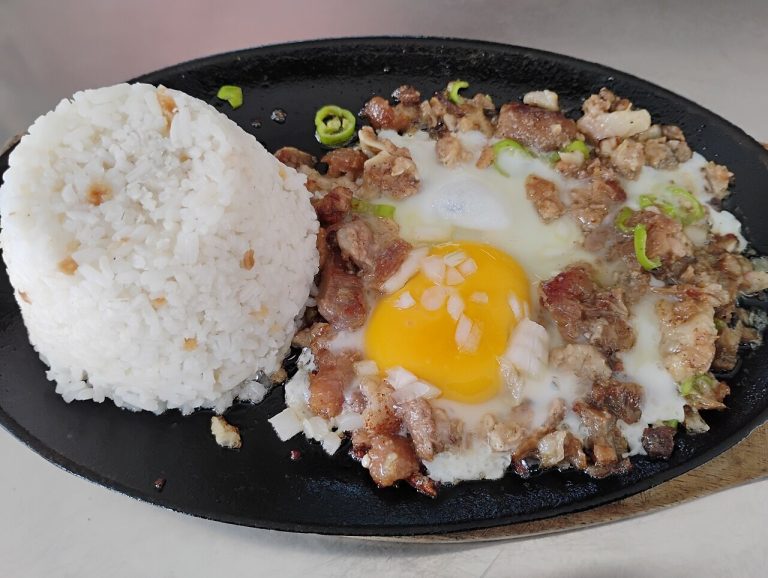
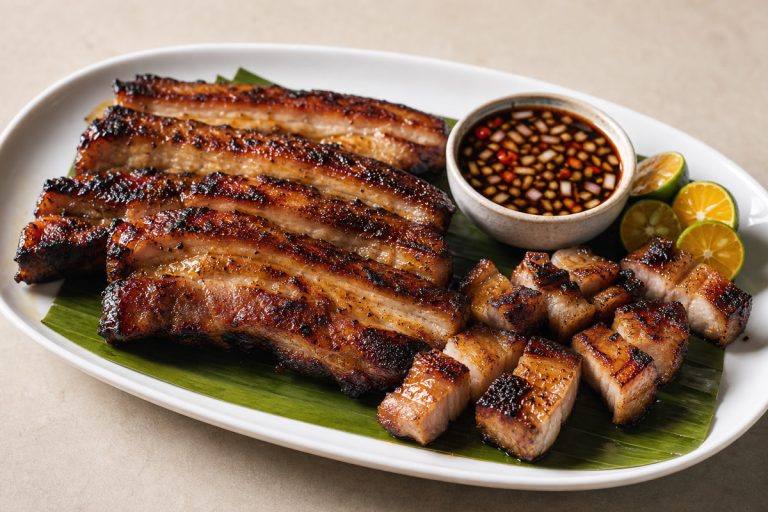
Dinakdakan is an Ilocano grilled pork dish coated in a creamy calamansi dressing, not a sizzling plate of finely chopped sisig. This accessible version uses belly and shoulder, keeps the pieces in coarse strips, and folds them with onion and chiles after grilling.
Why make it: This version keeps dinakdakan's creamy, tangy dressing and coarse cut while using easier-to-find pork belly and shoulder in place of pig ears and face.
About This Recipe
Ginger and bay season the pork during its first cook. Once tender, the pieces are drained and dried before grilling, broiling, or searing. The second cook is about browning the surface, so removing moisture is worth the extra attention.
Traditional dinakdakan uses mashed cooked pig brain for its creamy coating. Because that ingredient is difficult to source in many U.S. kitchens, this version uses a measured amount of mayonnaise with calamansi and black pepper. Onion and chiles go in only after the pork is grilled and sliced, so their bite stays clear.
Cooking Notes
- Let the drained pork shed surface moisture before browning. Blot creases and fatty folds too; a dry exterior helps each piece make useful contact with the grill or pan.
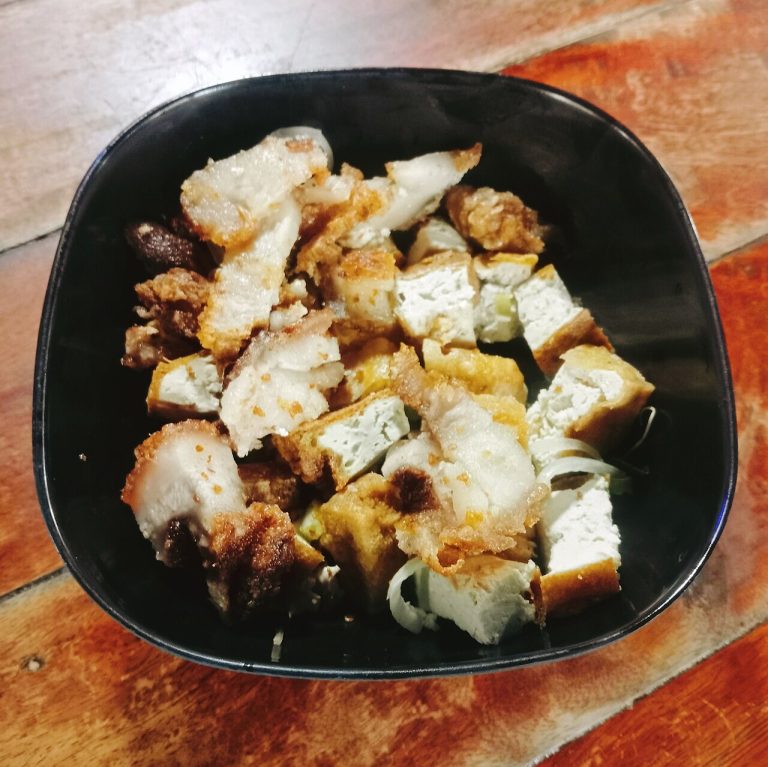
- Cut the grilled pork into short, coarse strips rather than mincing it. The larger cut and creamy citrus coating help keep this dish distinct from finely chopped, sizzling sisig.
Ingredient Notes
For the pork
Pig ears and face are traditional choices. Belly and shoulder make a practical adaptation with enough skin, fat, and meat to grill and slice into contrasting pieces.
For the dressing
Mayonnaise stands in for the traditional mashed pig-brain dressing. Use only enough to lightly coat the warm pork; the calamansi should still taste bright.
Dinakdakan Recipe
This version keeps dinakdakan's creamy, tangy dressing and coarse cut while using easier-to-find pork belly and shoulder in place of pig ears and face.
Shopping List
- pork belly
- pork shoulder
- mayonnaise
- calamansi or lemon juice
- red onion
- ginger
- Thai chiles
- bay leaf
- black pepper
Ingredients
Pork
- 1 pound pork belly
- 1 pound pork shoulder
- 8 cups water
- 1 thumb ginger, sliced
- 2 bay leaves
- 1 teaspoon salt
Dressing
- 3 tablespoons mayonnaise
- 1/4 cup calamansi juice or lemon juice
- 1/2 teaspoon black pepper
Finish
- 1 small red onion, thinly sliced
- 2 Thai chiles, sliced
- 1 green onion, sliced
- Extra calamansi wedges
Instructions
- Simmer pork with water, ginger, bay leaves, and salt until tender.
- Drain and dry the pork well.
- Grill, broil, or pan-sear the pork until browned and crisp at the edges.
- Slice the pork across the grain into short strips about 1/4 inch thick, leaving some crisp skin attached to the meat.
- Whisk the mayonnaise with calamansi juice and pepper until smooth and pourable.
- Toss pork with dressing, onion, chiles, and green onion.
- Taste and adjust with more citrus, salt, or chiles before serving.
Nutrition Estimate
Approximate values per serving based on the listed ingredients and yield. Actual nutrition will vary by brand, exact portion size, and cooking changes.
Tips For The Best Dinakdakan
- Dry before grilling: The pork browns faster when the surface is not wet.
- Keep the cut coarse: Short strips preserve the contrast between crisp skin, fat, and meat.
- Keep it bright: Calamansi should cut through the richness.
- Serve soon: The onion and crisp pork are best right after tossing.
How To Serve And Store
Serve as pulutan or with garlic rice and sliced tomatoes. Refrigerate leftovers for up to 3 days and refresh with citrus after reheating.
Common Questions
Is dinakdakan the same as sisig?
They are related chopped pork dishes, but dinakdakan has its own Ilocano profile and dressing style.
Why does this version use mayonnaise?
Traditional versions use mashed cooked pig brain for the creamy dressing. Mayonnaise is the more accessible substitute used in this home adaptation.
Can I make it mild?
Use fewer chiles and serve extra on the side.
Can I use leftover grilled pork?
Yes. Slice it into short, coarse strips and toss it with the dressing and fresh onions.
What keeps dinakdakan distinct from sisig?
This version uses a coarse sliced cut, a creamy calamansi-mayonnaise dressing, and no final sizzling step. The pork is grilled first, then dressed with onion and chiles.
Can I brown the pork without a grill?
Yes. Broiling or pan-searing are listed options after simmering. Dry the tender pork first, then focus on browned edges before chopping; the meat should already be tender from its first cook.
Do you like dinakdakan creamy, extra sour, or heavy on the chiles? Share your family version or testing notes in the comments.
Recipe inspiration and technique reference: Filipino home-cooking source research from Panlasang Pinoy, Kawaling Pinoy, and Filipino-American cooking sources in the site roadmap.