Kimchi Fried Rice
 Recipe Guy
Fil-Am Fusion | Weeknight Dinner | Asian Rice
Give the kimchi its own time in the pan before adding rice. Cooking it with browned Spam or bacon deepens its flavor, while gochujang and measured kimchi juice spread the sour, spicy seasoning through the grains without flooding the skillet.
About This Recipe
Cold cooked rice is the backbone, and well-fermented kimchi supplies more than heat: its acidity distinguishes this skillet from plain seasoned rice. The sauce combines kimchi juice, gochujang, soy sauce, and sesame oil so thick paste does not land in isolated pockets.
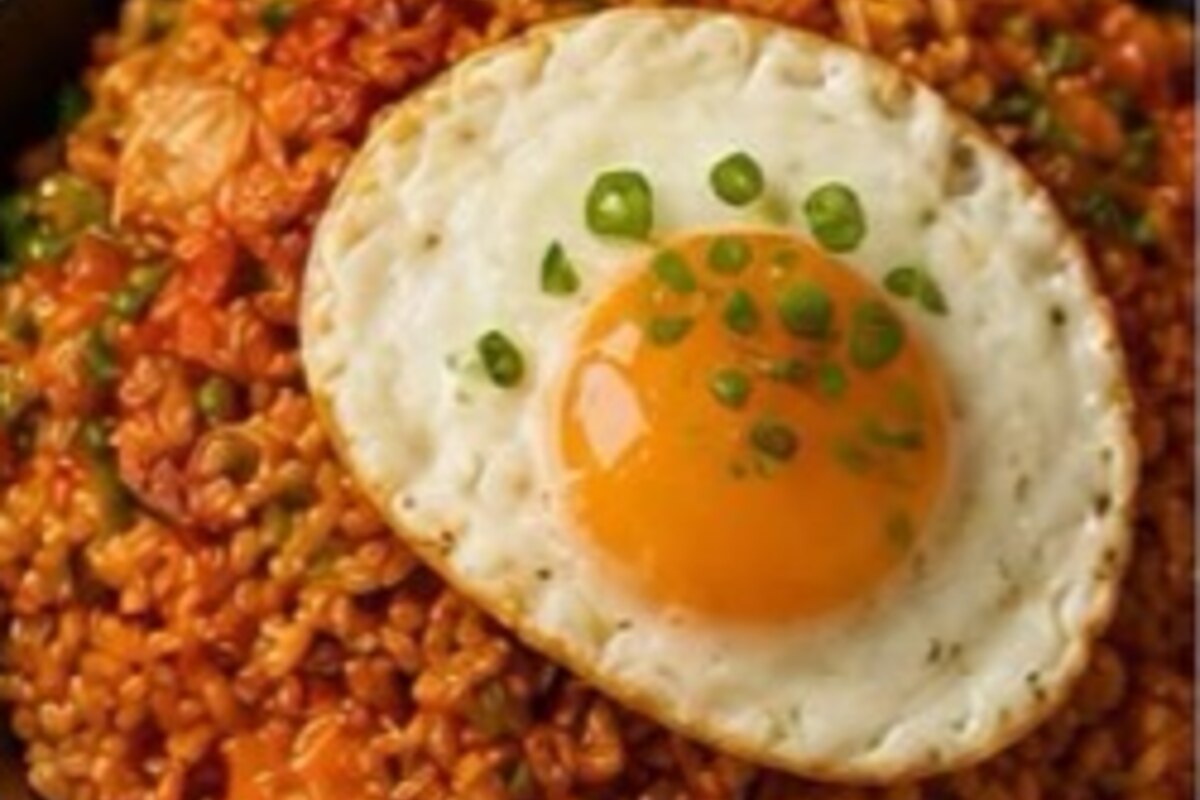
Spam gives firm, salty cubes; bacon contributes a different texture as its fat renders. Either goes in before the chopped kimchi. Green onions are folded in near the end, with a fried egg on each serving to make the three cups of rice into a fuller meal.
Ingredient Notes
Rice
Cold day-old rice gives the best separate grains. Fresh rice can work if spread on a tray and cooled until dry.
Heat
Use a wide skillet or wok and cook in batches if the pan is crowded.
Seasoning
Taste at the end. Soy sauce, fish sauce, oyster sauce, kimchi, and ham all bring different salt levels.
Cooking Notes
- Measure the kimchi juice separately from the chopped kimchi. Scooping both freely from the jar adds uncontrolled liquid and can keep the rice steaming instead of toasting.
- Mix the gochujang sauce before the skillet is hot. Scrape the bowl into the rice thoroughly, then lift and turn the grains until no concentrated red streaks remain.
Kimchi Fried Rice Recipe
A punchy kimchi fried rice with bacon or Spam, gochujang, kimchi juice, sesame oil, scallions, and a fried egg.
Shopping List
- cooked rice
- kimchi
- kimchi juice
- Spam or bacon
- gochujang
- soy sauce
- sesame oil
- eggs
- green onions
- neutral oil
Ingredients
Rice and Protein
- 3 cups cold cooked rice
- 3 ounces Spam or bacon, diced
- 1 fried egg per serving
Kimchi Base
- 1 cup well-fermented kimchi, chopped
- 2 tablespoons kimchi juice
- 2 green onions, sliced
Sauce
- 1 tablespoon gochujang
- 1 tablespoon soy sauce
- 1 teaspoon sesame oil
- 1 teaspoon sugar, optional
Instructions
- Stir gochujang, soy sauce, kimchi juice, sesame oil, and sugar in a small bowl.
- Cook Spam or bacon in a wide skillet until browned and some fat renders.
- Add chopped kimchi and cook until it darkens slightly and smells roasted.
- Add cold rice and press out clumps with the spatula.
- Pour in the sauce and toss until the rice is evenly red-orange.
- Stir-fry until the rice is hot and lightly toasted in spots.
- Fold in green onions.
- Serve with a fried egg and extra sesame oil if desired.
Nutrition Estimate
Approximate values per serving based on the listed ingredients and yield. Actual nutrition will vary by brand, exact portion size, and cooking changes.
Tips For The Best Kimchi Fried Rice
- Use cold rice: Warm soft rice clumps and steams instead of frying.
- Prep before heating: Fried rice moves fast, so have sauces, eggs, vegetables, and garnishes ready.
- Cook in layers: Brown protein and aromatics first, then add rice and sauce.
- Finish hot: The last minute over higher heat gives the grains better texture.
How To Serve And Store
Serve hot with roasted seaweed, cucumber, or a simple side of greens. Refrigerate leftovers up to 3 days.
Common Questions
Can I use fresh rice?
Yes. Spread it on a tray, cool it quickly, and let surface moisture dry before frying.
What pan works best?
A carbon-steel wok is ideal, but a large nonstick or stainless skillet works.
Can I make it ahead?
Yes, but fried rice tastes best fresh. Reheat in a skillet with a small splash of oil.
Can I use brown rice?
Yes. Cold cooked brown rice works well and stays separate.
Why should I cook the kimchi before adding the rice?
It gives the chopped kimchi direct contact with the hot pan and the fat from the meat. Look for slight darkening and a roasted aroma before the rice covers the cooking surface.
What should I do with stubborn clumps of cold rice?
Break them apart before cooking when possible. In the skillet, press gently with the broad face of the spatula, then turn the grains through the sauce rather than chopping them repeatedly.