Dumpling Dipping Sauces
 Recipe Guy
Sauces | Party and Potluck | Fil-Am Fusion
A dumpling dipping sauce should season a bite without drowning out the filling. This mixing guide explores soy, vinegar, citrus, garlic, ginger, and chile in different combinations, with sesame oil used sparingly and the dumpling itself serving as the reference for balance.
About This Recipe
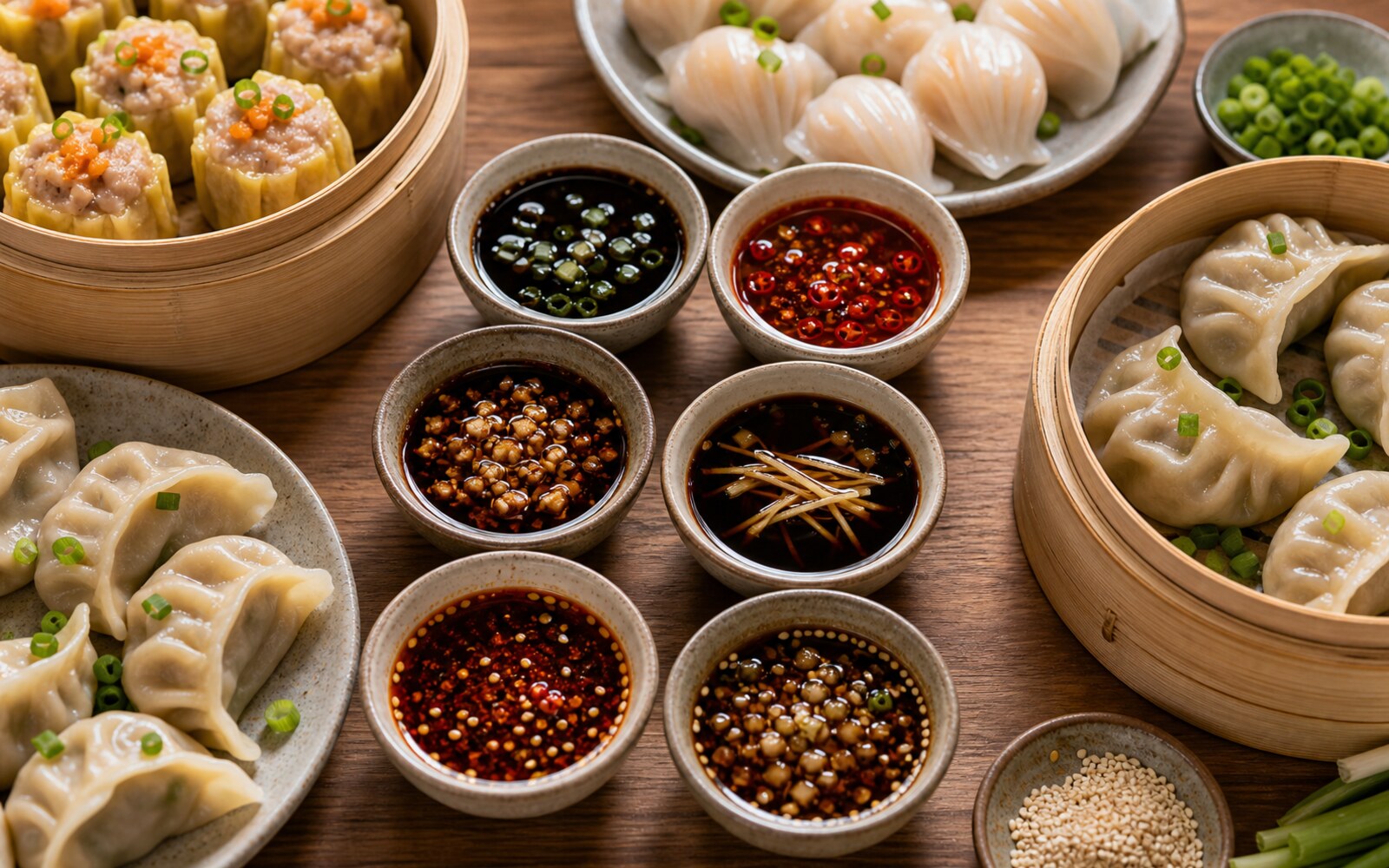
Each sauce below has its own small-bowl formula. Soy sauce contributes salt, vinegar and calamansi bring acidity, and finely minced aromatics add texture. Measured water softens the concentrated seasonings; it is not a shared pool to divide among all six bowls.
Choose black vinegar for a sharper dip, garlic-calamansi soy for a Filipino-style citrus note, or sweet garlic soy for a rounder finish. Chili vinegar and sesame chili supply heat, while ginger soy adds a fresh aromatic bite. Each is mixed separately and served by the spoonful, not as a whole-bowl serving.
Cooking Notes
- Mince garlic and ginger finely enough to cling to a dipped dumpling. Large pieces sink and leave the liquid lightly seasoned while the bottom of the bowl becomes harsh.
- Add sesame oil a few drops at a time, stirring between additions. Its aroma can dominate a small dipping bowl before the soy and vinegar need any further changes.
Ingredient Notes
Balance
A good dumpling sauce has salt, acid, aroma, and a little sweetness.
Sesame oil
Use it lightly because it can dominate.
Six Dumpling Dipping Sauces
Choose one formula for a small bowl, or make several separately. Each serving is about 1 tablespoon; yields below are approximate because minced aromatics add volume. Do not combine all six ingredient lists.
Shopping List
- soy sauce and drinking water for any option
- Chinese black vinegar for Black Vinegar
- unseasoned rice vinegar for Chili Vinegar, Ginger Soy, Sesame Chili or Sweet Garlic Soy
- calamansi or lime for Garlic Soy
- fresh garlic for Garlic Soy or Sweet Garlic Soy
- fresh ginger for Black Vinegar or Ginger Soy
- scallion for Ginger Soy
- commercial chili oil for Chili Vinegar or Sesame Chili
- toasted sesame oil and sesame seeds for Sesame Chili
- honey or brown sugar for Sweet Garlic Soy
- red pepper flakes, optional for Chili Vinegar
Ingredients by Sauce
Black Vinegar: About 4 Tablespoons
- 2 tablespoons Chinese black vinegar
- 1 tablespoon soy sauce
- 1 tablespoon water
- 1 teaspoon finely minced ginger
Chili Vinegar: About 4 Tablespoons
- 2 tablespoons unseasoned rice vinegar
- 1 tablespoon soy sauce
- 1 tablespoon water
- 1 teaspoon commercial chili oil, stirred before measuring
- 1/4 teaspoon red pepper flakes, optional
Garlic Soy: About 4 Tablespoons
- 2 tablespoons soy sauce
- 1 tablespoon calamansi or lime juice
- 1 tablespoon water
- 1 teaspoon finely minced garlic
Ginger Soy: About 5 to 6 Tablespoons
- 2 tablespoons soy sauce
- 1 tablespoon unseasoned rice vinegar
- 1 tablespoon water
- 2 teaspoons finely minced ginger
- 1 tablespoon finely sliced scallion
Sesame Chili: About 5 Tablespoons
- 2 tablespoons soy sauce
- 1 tablespoon unseasoned rice vinegar
- 1 tablespoon water
- 1 teaspoon commercial chili oil, stirred before measuring
- 1/2 teaspoon toasted sesame oil
- 1 teaspoon toasted sesame seeds
Sweet Garlic Soy: About 5 Tablespoons
- 2 tablespoons soy sauce
- 1 tablespoon warm water
- 2 teaspoons unseasoned rice vinegar
- 2 teaspoons honey or packed brown sugar
- 1 teaspoon finely minced garlic
Instructions
- Select one formula and measure only its ingredients into a clean small bowl. For Sweet Garlic Soy, dissolve its honey or sugar in its tablespoon of warm water first.
- Stir the selected ingredients thoroughly. Rest for 5 minutes to let the minced aromatics season the liquid, then stir again.
- Dip a piece of the cooked dumpling to judge balance. For a milder dip, add water 1 teaspoon at a time, noting that this increases yield. Serve about 1 tablespoon per person and replenish with a clean spoon as needed.
- Keep unused sauce separate from individual dipping bowls. Refrigerate unused portions promptly in labeled covered containers; discard sauce contaminated by bites or used eating utensils.
Nutrition by Sauce
This is a collection of alternatives, not one combined recipe. A single calorie or nutrient total would be misleading. Use the ingredient quantities, yield and nutrition estimate for the individual recipe you choose; its estimate does not include every variation, optional topping, sauce or side dish. The separate formulas above require separate calculations for their stated portions; no combined estimate is provided.
Tips For The Best Dumpling Dipping Sauces
- Taste with food: Sauce tastes different alone than with dumplings.
- Rest briefly: Garlic and ginger need a few minutes to season the sauce.
- Use calamansi: Calamansi makes the sauce feel more Filipino.
- Keep spicy separate: Serve chili oil on the side for mixed guests.
How To Serve And Store
Serve with siomai, lumpia, gyoza, wontons or fried tofu. Keep unused sauce covered at 40 F or below and use within 4 days; make smaller batches for best fresh-aromatic flavor. These are refrigerator sauces, not shelf-stable preserves, and added vinegar is not a validated canning process.
Common Questions
Can I use cane vinegar?
Yes. It works well for Filipino siomai.
How long does it keep?
Refrigerate unused sauce at 40 F or below and use within 4 days. Discard any portion used for individual dipping; do not pour it back into stored sauce.
Can I add sugar?
Yes. A little sugar rounds out soy and vinegar.
What sauce is best for pork siomai?
Soy, calamansi, chili garlic, and a little sesame oil.
Do I mix all the listed pantry quantities into one sauce?
No. The card now gives six independent ingredient lists and a yield for each bowl. Make only the formula you choose, or mix several in separate bowls.
How do I check whether a dumpling sauce is too strong?
Dip a small portion of the actual dumpling rather than tasting a spoonful of sauce alone. Its wrapper and filling change the balance; if the sauce overwhelms both, the listed water can soften it.
Technique and food-safety references: thewoksoflife.com; fsis.usda.gov.