
Korean Fried Chicken Variations
 Recipe Guy

Chicken | Party and Potluck | Fil-Am Fusion
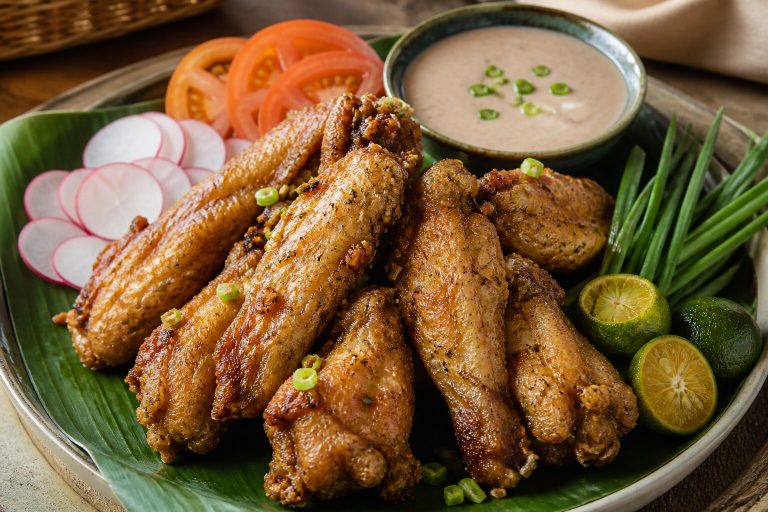
This Korean-style fried chicken guide starts with one egg, flour, and cornstarch coating, then separates into sauce and seasoning variations. Think sweet-hot yangnyeom, soy garlic, honey butter, or a dry cheese finish, rather than one batch carrying every flavor.
About This Guide
The shared base uses wings or drumettes and a two-stage fry. Chicken cooks through in the first stage, rests briefly, then returns to the oil for a crisper exterior. Similar-size pieces make that sequence easier to manage across several batches.
Choose a single finishing direction before shopping. The plain two-pound base below is complete on its own, and all six named variations link directly to complete author recipes with their own chicken quantities and finishes. Follow one full formula; do not combine all the sauces or borrow a sauce quantity without checking its batch size.
Cooking Notes
- Keep wings or drumettes of similar size together during frying. Mixing very small and large pieces in one batch makes the shared cooking cues less useful.
- Have the selected sauce or dry coating ready before the second fry. Finish the chicken lightly and serve promptly instead of letting it sit while a sauce is assembled.
Ingredient Notes
Double fry
The second fry drives off moisture and hardens the crust.
Sauce
Warm a cooked sauce as its recipe directs, then coat lightly. Snow cheese is a dry seasoning added after frying, not a sauce to simmer.
Korean Fried Chicken: Plain Base And Six Variations
The plain base makes 4-6 servings. For a finished variation, use one of the complete author recipes linked below, including that recipe's chicken quantity, coating, and measured finish.
Shopping List For The Plain Base
- 2 pounds chicken wing flats and drumettes, separated at the joints; no whole legs or large breast pieces
- 1 teaspoon salt and 1/2 teaspoon ground black pepper
- 1 large egg
- 1/2 cup all-purpose flour
- 1/2 cup cornstarch
- About 6-8 cups neutral frying oil, as needed for a 1 1/2-inch depth without filling the pot more than one-third full
Equipment
Use a heavy 6-quart or larger pot about 10 inches across, a frying thermometer, an instant-read food thermometer, tongs or a spider, and a wire rack over a rimmed tray. Keep the pot stable and dry; adjust oil quantity to its actual dimensions and leave generous headroom.
Plain Base Method
- Pat the wing pieces dry; do not rinse raw chicken. Season with salt and pepper. Beat the egg in a large bowl, add chicken, and turn to coat. Combine flour and cornstarch separately, then toss the egg-coated pieces in the dry mixture and shake off loose excess.
- Heat the oil to 325-330 F. Lower in 4-5 similar-size pieces with tongs, leaving room between them. Monitor the frying thermometer and let the oil recover between batches.
- First fry for approximately 8-12 minutes, turning as needed. Lift a thick piece clear of the oil and check the meat without touching bone: every batch must reach at least 165 F. Color alone is not the endpoint. Continue cooking if necessary, lowering heat if the crust darkens too quickly.
- Drain on the rack at least 5 minutes. Finish first-frying the remaining pieces; do not store partially cooked chicken for a later second fry.
- Raise the oil to 350-360 F. Fry the cooked pieces again in small batches for about 3-5 minutes, until the crust is crisp and golden. Drain on the rack and serve promptly. Allow roughly 40-60 minutes for frying the full two-pound batch, depending on pot capacity and piece size.
Six Complete Variation Recipes
- Yangnyeom: Maangchi's sweet, sour, and spicy fried chicken provides the complete chicken coating and cooked gochujang-ketchup glaze.
- Soy garlic: Hyosun's Korean fried chicken at Korean Bapsang includes a measured soy-garlic sauce option. Select that sauce and use the full associated chicken recipe.
- Honey butter: Maangchi's honey butter fried chicken gives the complete batter and buttery garlic-honey finish, including how to heat and combine them.
- Gochujang: Choose the measured red spicy sauce in Hyosun's complete fried-chicken recipe. This is a gochujang-based yangnyeom style, not an unrelated seventh sauce or an instruction to add undiluted paste.
- Snow cheese: Raymund's Snowy Fried Chicken at Ang Sarap includes its own chicken marinade and a measured blend of milk powder, powdered sugar, and Parmesan. Prepare and sprinkle the dry finish as directed; keep chicken refrigerated during its longer marination.
- Sweet chili: Tom's Table's Korean fried chicken in sweet chilli sauce supplies a complete small-piece chicken recipe and measured honey, chili-paste, and vinegar glaze. It is a homemade sauce, not bottled sweet chili sauce plus an unspecified amount of honey. Its small boneless pieces have different frying times from the wing base above.
For every version, check chicken for at least 165 F in the thickest meat, keep raw and cooked utensils separate, and measure oil temperature. Shopping quantities and time for the linked recipes belong to those full recipes, not to the plain base by default.
Nutrition By Selected Recipe
This is a collection of alternatives, not one combined recipe. A single calorie or nutrient total would be misleading. Use the ingredient quantities, yield and nutrition estimate for the individual recipe you choose; its estimate does not include every variation, optional topping, sauce or side dish. The separate formulas above require separate calculations for their stated portions; no combined estimate is provided.
Tips For The Best Korean Fried Chicken Variations
- Pat dry: Dry chicken fries crisper.
- Use cornstarch: Cornstarch lightens the crust.
- Sauce lightly: Too much sauce softens the chicken.
- Serve fast: This is best right after tossing.
How To Serve And Store
Serve hot with rice, pickles, or slaw. Refrigerate leftovers in shallow containers within 2 hours, or 1 hour above 90 F, and use within 3-4 days. Reheat in an oven or air fryer until the thickest meat reaches 165 F; crispness will vary with the sauce. Do not use the second fry to finish chicken that was only partly cooked and stored.
Common Questions
Can I use boneless chicken?
The linked sweet-chili recipe specifies boneless pieces and its own method. Use that full formula rather than treating the wing-base times as suitable for every cut. All chicken still needs at least 165 F.
Can I bake it?
The retained base is formulated for frying. It has no equivalent oven time; use a complete oven-fried recipe for that method instead of applying the frying schedule to an oven.
Is this Filipino?
It is a Fil-Am party-table idea, not a traditional Filipino dish. The linked authors are credited for their individual Korean-style versions.
Can I make it spicy?
Choose Maangchi's yangnyeom recipe or Korean Bapsang's red gochujang sauce option and follow its measured ingredients. Gochujang varies in heat and salt, so adding it without regard to the sauce balance changes the result.
Does pale golden chicken mean the first fry is finished?
No. For the wing base, fry at 325-330 F for about 8-12 minutes per batch and verify at least 165 F in the thickest meat without touching bone. Rest on a rack, then crisp at 350-360 F for about 3-5 minutes. Thermometer readings take priority over color and time.
Can I mix all the listed sauces together?
No. Each of the six entries links directly to a complete finished recipe. Choose one and use its chicken quantity and finish together. Snow cheese is a dry coating; it should not be stirred into the wet sauces.
Technique and food-safety references: koreanbapsang.com; maangchi.com; maangchi.com; angsarap.net; tomstable.com; foodsafety.gov; fsis.usda.gov.

