
Crema de Fruta: Filipino Layered Fruit Cake
 Recipe Guy
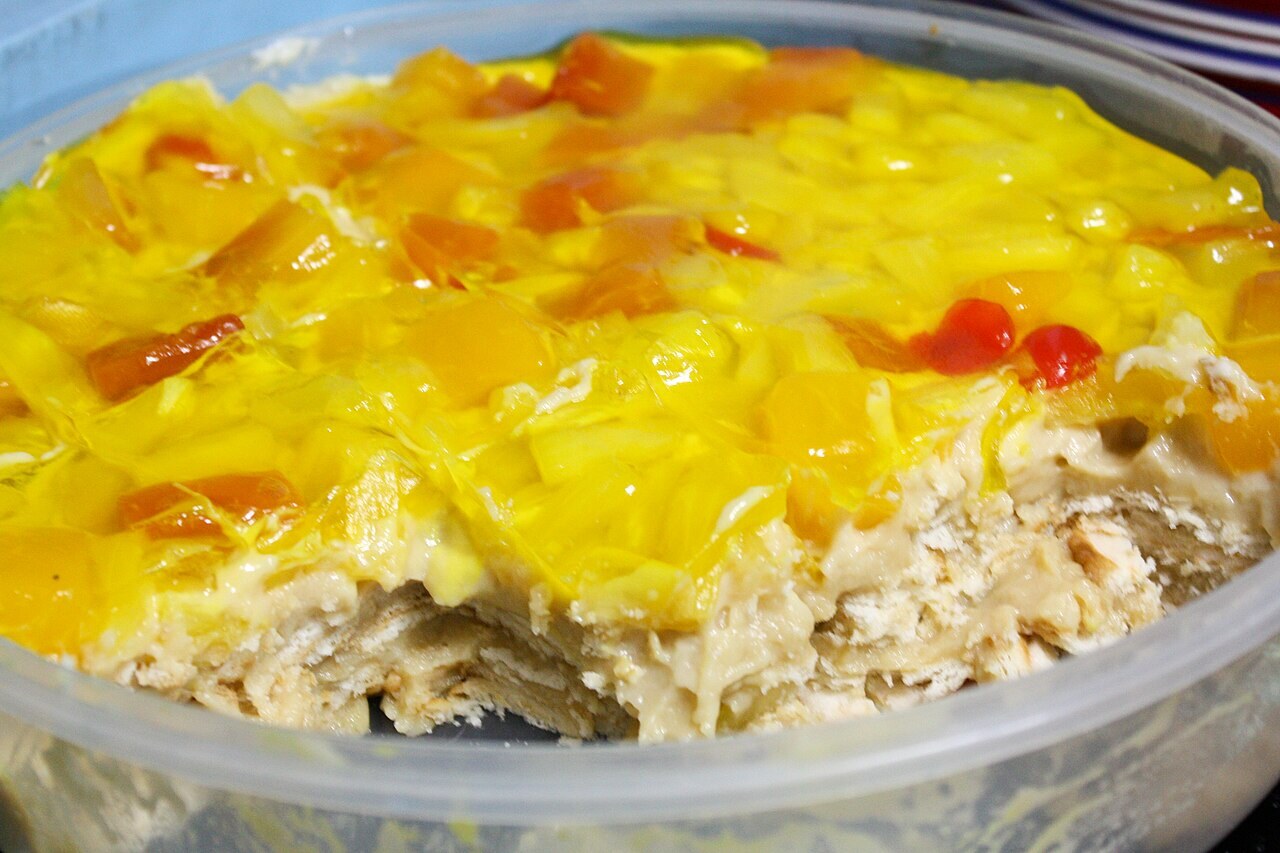
Filipino party cake | Custard | Fruit and gelatin
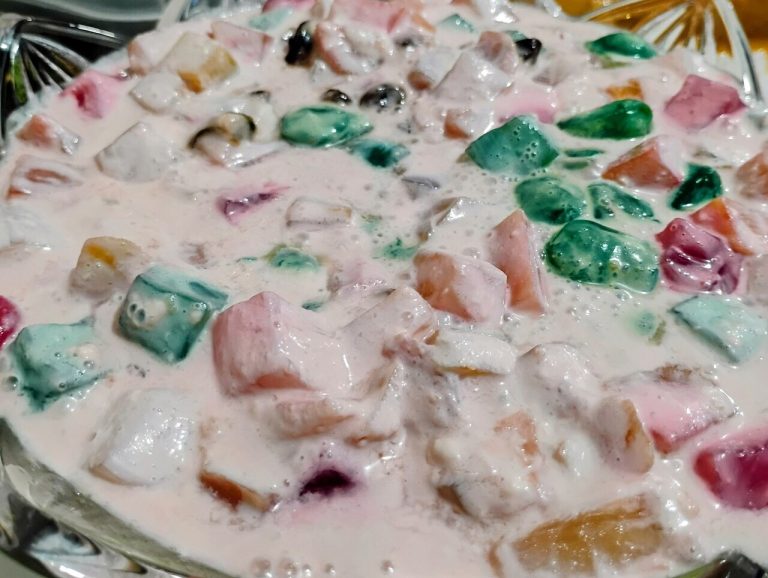
Crema de fruta balances soft cake and vanilla custard with a cool layer of fruit and gelatin. Drained fruit cocktail and peaches keep the assembly manageable, but their moisture still matters: a little care here helps the layers stay distinct when sliced.
Why make it: This version gives a store-bought sponge shortcut and a homemade custard path, making the party tray manageable for busy hosts.
Fresh From the Kitchen
About This Recipe
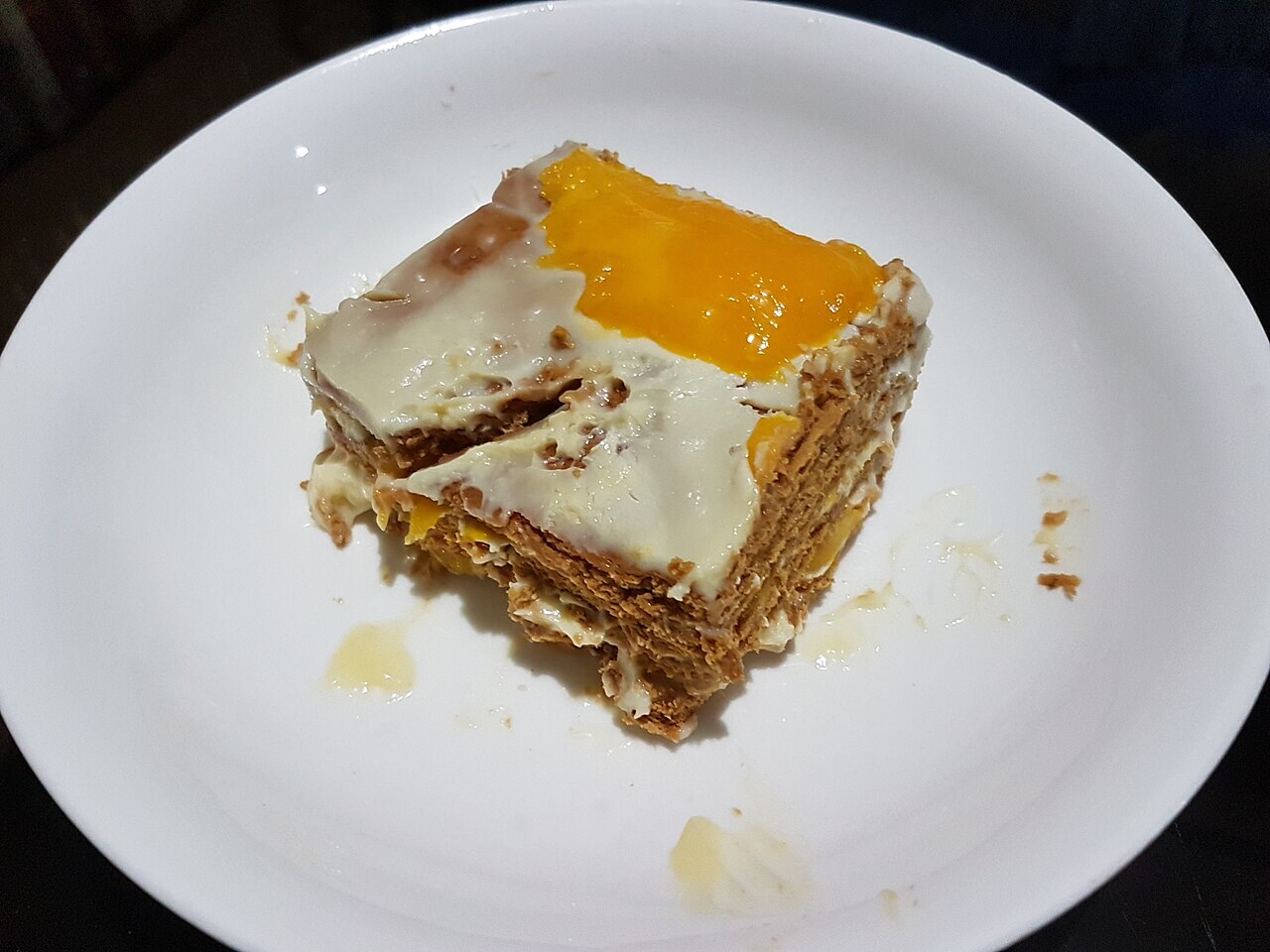
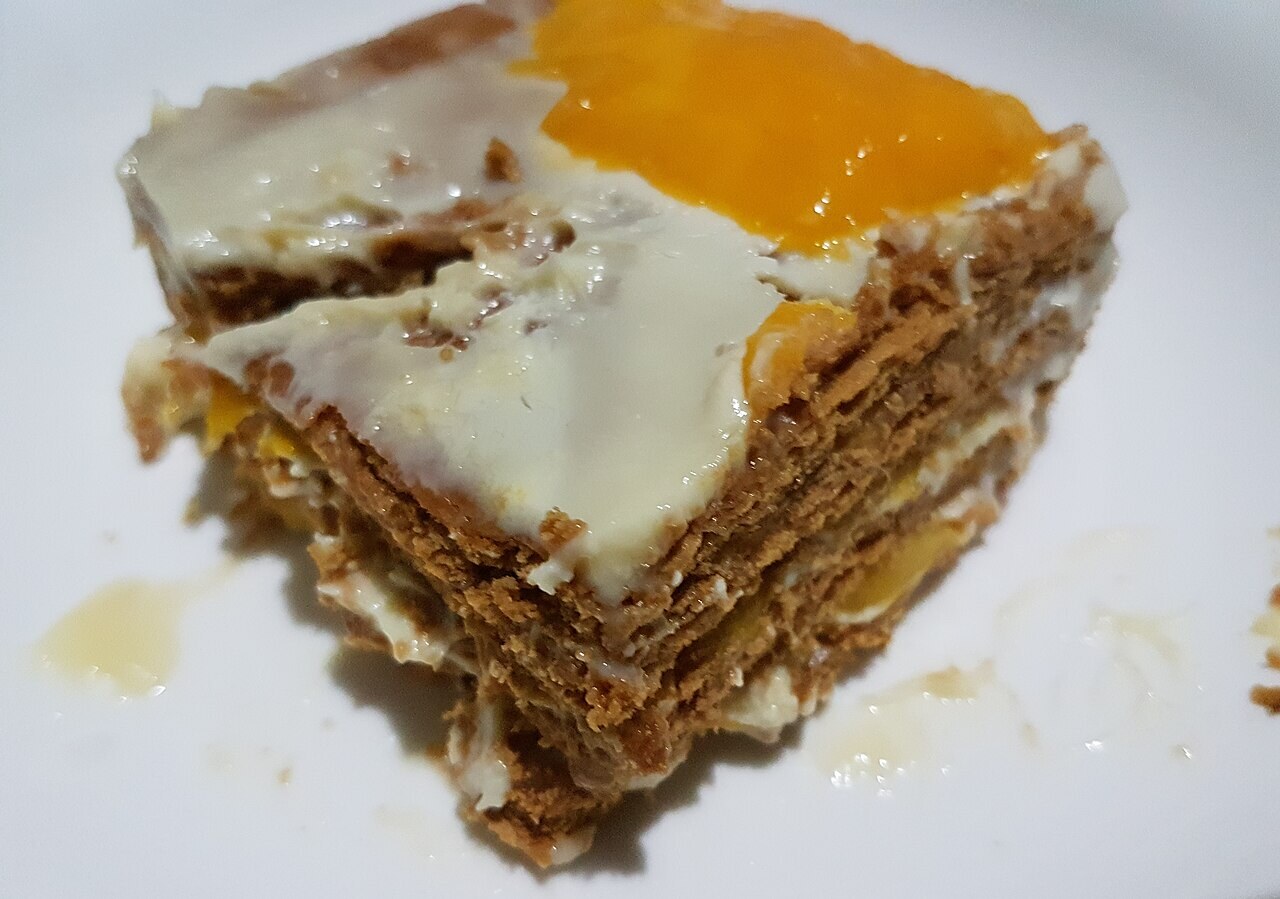
A baked sponge layer or ladyfingers provide the base, so the main stovetop job is the custard. Milk, yolks, cornstarch, sugar, and vanilla cook into a thick mixture that spreads over the cake while still warm.
The fruit sits above that custard rather than being stirred through it. A cooled, pourable gelatin glaze coats the top, using reserved fruit juice or water. Allow the dessert to set fully before cutting; the soft layers need that chill to hold together.
Cooking Notes
- Drain the fruit in a strainer and reserve the juice separately for measuring. Pouring fruit straight from the cans would add unmeasured syrup to the custard layer.
- Spoon the cooled gelatin over the fruit gently instead of dumping it into one spot. A forceful stream can disturb the fruit arrangement and dig into the softer custard beneath.
Ingredient Notes
For the cake layer
Use a plain sponge cake, mamon-style cake, or ladyfingers. The layer should be soft enough to absorb a little custard.
For the topping
Let the gelatin cool until syrupy before pouring so it does not melt the custard.
Crema de Fruta Recipe
This version gives a store-bought sponge shortcut and a homemade custard path, making the party tray manageable for busy hosts.
Shopping List
- 9-by-13-inch sponge layer or 24 standard ladyfingers (about 200 g)
- milk
- egg yolks
- sugar
- cornstarch
- vanilla
- 2 cans fruit cocktail, 15 oz / 425 g each
- peaches
- 7 g unflavored powdered gelatin
- fruit juice
Ingredients
Cake and Fruit
- 1 baked plain sponge layer, 9 by 13 inches and about 3/4 inch thick, or 24 standard ladyfingers (about 200 g) arranged to cover that area in one snug layer
- 2 cans fruit cocktail, 15 oz / 425 g net weight each, well drained; use all the drained fruit and reserve the packing liquid for the glaze
- 1 cup sliced canned peaches, drained
Custard
- 2 cups milk
- 4 egg yolks
- 1/2 cup sugar
- 3 tablespoons cornstarch
- 1 teaspoon vanilla
- Pinch of salt
Gelatin Glaze
- 7 g (one 1/4-ounce envelope) unflavored powdered gelatin, not agar or flavored jelly powder
- 1 cup reserved canned-fruit liquid or water, divided into 1/4 cup cold and 3/4 cup for heating
- 2 tablespoons sugar
- 1 tablespoon lemon or calamansi juice, optional
Instructions
- Use a 9-by-13-inch serving dish at least 2 1/2 inches deep. Trim the sponge to fit its bottom, or arrange the ladyfingers snugly in a single layer, breaking pieces to fill gaps. Drain the two cans of fruit cocktail and measure the separate cup of peaches before starting the custard.
- In a saucepan, whisk the sugar, cornstarch, and salt together, then gradually whisk in the milk and yolks until smooth.
- Cook over medium heat, whisking constantly along the bottom and corners until thick and bubbling in the center. Continue whisking for 1 minute, remove from the heat, then stir in vanilla.
- Spread the warm custard evenly over the cake, sealing it to the dish edges. Refrigerate for about 30 minutes, until the surface is cool and set enough to support fruit.
- Arrange drained fruit over the custard.
- Sprinkle the gelatin over the 1/4 cup cold reserved liquid and let bloom for 5 minutes. Heat the remaining 3/4 cup liquid with the 2 tablespoons sugar until steaming and dissolved. Off the heat, stir in the bloomed gelatin for at least 2 minutes until no grains remain; do not boil it. Add the optional tablespoon citrus juice, then cool until slightly syrupy but still pourable. Use canned-fruit liquid, not fresh pineapple or papaya juice, which can prevent setting.
- Spoon gelatin gently over the fruit.
- Cover and refrigerate at least 4 hours after glazing, until the gelatin and custard are firmly set. Cut the tray into 12 portions.
Nutrition Estimate
Approximate nutrition for 1 serving (one-twelfth of the ladyfinger dessert). For the 200 g ladyfinger option, assuming about 536 g drained cocktail from the two cans and 222 g drained peaches. Uses water in the glaze; sponge cake and sweet packing liquid are not included. Calculated from published food data, not laboratory tested; brands and portions vary.
Tips For The Best Crema de Fruta
- Drain fruit well: Excess syrup can loosen the custard.
- Stir custard constantly: Cornstarch and egg yolks can lump if ignored.
- Cool the gelatin: Hot gelatin can damage the custard layer.
- Use a clear dish: The layers are part of the charm.
How To Serve And Store
Serve chilled in squares for holidays, birthdays, or potlucks. Refrigerate covered for up to 3 days.
Common Questions
Can I use graham crackers?
Yes, for an icebox-style shortcut, though the texture will be different.
Can I make it a day ahead?
Yes. It slices best after a full chill.
Can I use instant pudding?
Yes for speed, but homemade custard gives better flavor.
Why did the gelatin leak?
The custard may not have set, or the gelatin was poured while too hot.
Can I use ladyfingers instead of a sponge cake layer?
Yes. Arrange the listed ladyfingers into an even base, fitting them closely so the custard has support. Their shape differs from a single cake layer, but both provide a soft foundation for the fruit.
Why should the gelatin cool before I add it to crema de fruta?
Hot gelatin can disturb the custard layer and send liquid into the cake beneath. Let it become cool but still pourable, then spoon it over the fruit before it starts setting in the bowl.
Is crema de fruta a holiday dessert, birthday dessert, or anytime dessert for your family? Share your family version or testing notes in the comments.
Recipe inspiration and technique reference: Filipino dessert and bakery source research from Panlasang Pinoy, Kawaling Pinoy, The Dusky Kitchen, and Filipino-American dessert sources in the site roadmap.
Technique and food-safety references: knoxgelatine.com; knoxgelatine.com; kingarthurbaking.com; delmonte.com.
One thought on “Crema de Fruta: Filipino Layered Fruit Cake”