
Ginisang Sayote with Shrimp: Chayote Stir-Fry
 Recipe Guy
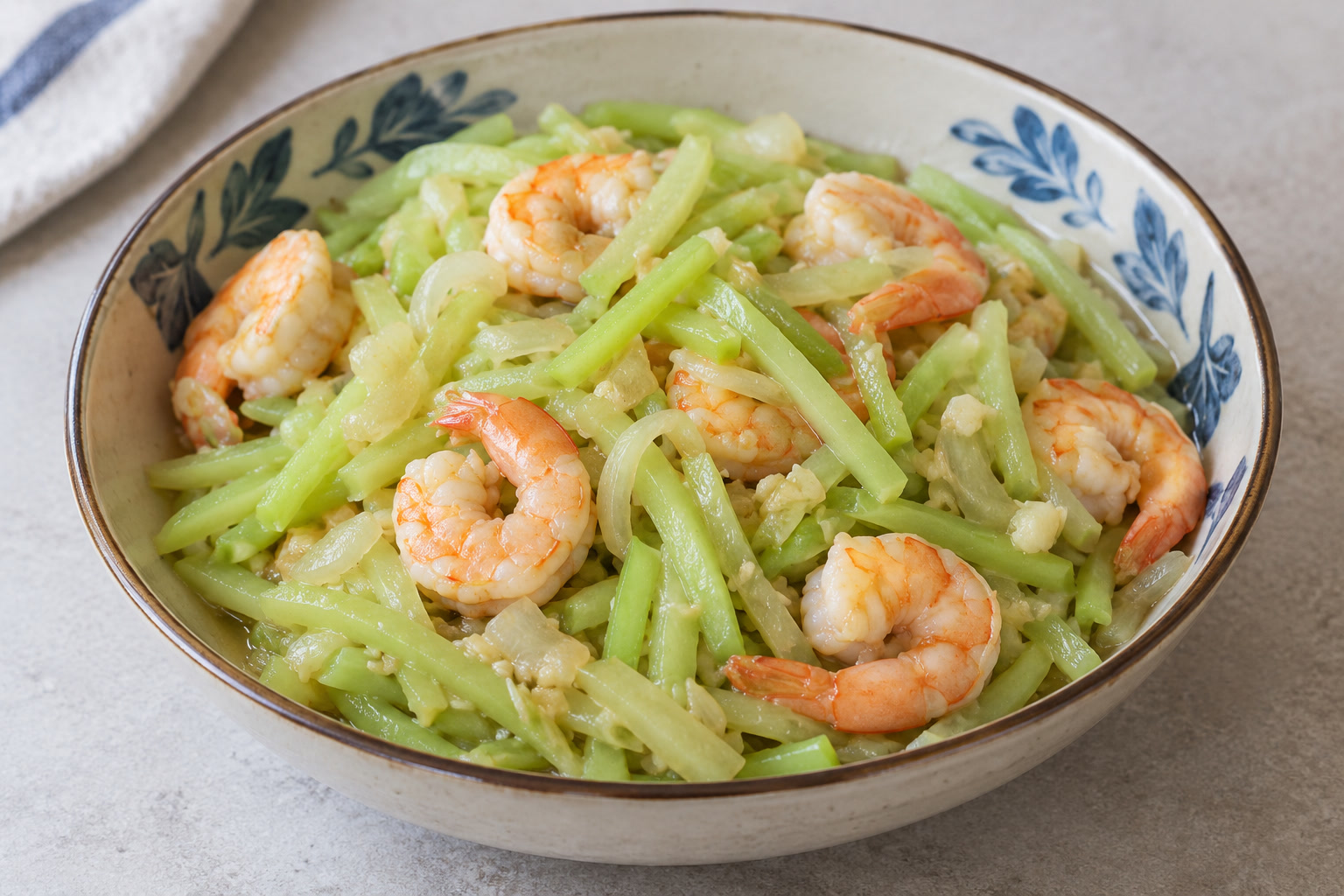
Filipino vegetable stir-fry | Chayote | Shrimp
Chayote is the main event in this shrimp saute: juicy slices with enough bite to hold their own against rice. Softened tomatoes, garlic, and fish sauce make a light pan sauce, while the shrimp wait until the vegetables are almost ready.
Why make it: This version treats chayote like the practical U.S. grocery vegetable it is: easy to find, quick to prep, and perfect for a rice bowl.
About This Recipe
The chayote cooks covered with a modest amount of broth or water. Slice it evenly so the thickest pieces do not lag behind, and peel any tough skin before cutting. Its mild flavor leaves room for the tomatoes and shrimp.
This is a moist saute, not a heavily thickened stir-fry. The liquid helps the vegetables cook, and there is no starch slurry in the sauce. Finish with black pepper, then offer the optional calamansi or lemon for a brighter edge at the table.
Cooking Notes
- Let the tomatoes soften with the onion and garlic before adding chayote. Breaking them down at this stage spreads their juice through the sauce instead of leaving firm tomato chunks.
- Spread the shrimp evenly over the partly cooked vegetables. Clumps need extra moving around, which can leave some shrimp cooking much longer than others while the chayote softens further.
Ingredient Notes
For chayote
Peel if the skin feels tough, then slice around the seed. Thin half-moons cook evenly and stay juicy.
For shrimp
Fresh or frozen peeled shrimp work. Add them near the end so they stay tender.
Ginisang Sayote with Shrimp Recipe
This version treats chayote like the practical U.S. grocery vegetable it is: easy to find, quick to prep, and perfect for a rice bowl.
Shopping List
- chayote squash
- shrimp
- tomatoes
- onion
- garlic
- fish sauce
- chicken broth or water
- neutral oil
- black pepper
- rice
Ingredients
Vegetables
- 2 large chayote squash, peeled if needed, seeded, and sliced
- 1 onion, sliced
- 4 garlic cloves, minced
- 2 tomatoes, chopped
Shrimp and Sauce
- 12 ounces peeled shrimp
- 1 tablespoon neutral oil
- 1 tablespoon fish sauce
- 1/2 cup chicken broth or water
- 1/4 teaspoon black pepper
For Serving
- Steamed rice
- Calamansi or lemon, optional
- Fried garlic, optional
Instructions
- Heat oil in a skillet and saute onion, garlic, and tomatoes until softened.
- Add chayote and fish sauce and toss to coat.
- Pour in broth or water, cover, and simmer until the chayote is crisp-tender.
- Add shrimp in an even layer.
- Cover and cook just until the shrimp flesh is firm, pearly or white, and opaque all the way through. Turn the shrimp as needed and cut into a thick one to check its center; pink exteriors alone are not the endpoint.
- Stir gently and season with pepper.
- Serve hot over rice with calamansi if you like.
Nutrition Estimate
Approximate values per serving based on the listed ingredients and yield. Actual nutrition will vary by brand, exact portion size, and cooking changes.
Tips For The Best Ginisang Sayote with Shrimp
- Do not overcook chayote: It should be tender but still fresh-tasting.
- Add shrimp late: Shrimp become rubbery when simmered too long.
- Use broth for depth: Water works, but broth makes the simple saute taste fuller.
- Cut evenly: Similar slices cook at the same pace.
How To Serve And Store
Serve as a light ulam with rice. Refrigerate leftovers for up to 3 days and reheat gently.
Common Questions
Can I use dried shrimp?
Yes. Rinse briefly and saute with the aromatics for a deeper flavor.
Can I make it without shrimp?
Yes. Use ground pork, tofu, or simply more vegetables.
Do I need to peel chayote?
If the skin is tender, peeling is optional. Tougher skins are better removed.
Can I add greens?
Yes. Spinach or malunggay can go in at the end.
Do I have to peel the chayote for this saute?
Peel it if the skin feels tough; tender skin can remain. Remove the seed and cut the flesh into uniform slices so it reaches the same texture throughout the pan.
Is pink color enough to tell that the shrimp are ready?
Check the flesh as well as the outside color: it should be pearly or white and opaque through the center. Add shrimp only after the chayote is crisp-tender so the vegetables do not delay serving.
Is sayote a side dish for you, or a whole rice-bowl dinner? Share your family version or testing notes in the comments.
Recipe inspiration and technique reference: Filipino home-cooking source research from Panlasang Pinoy, Kawaling Pinoy, and Filipino-American cooking sources in the site roadmap.
Technique and food-safety references: fda.gov.

