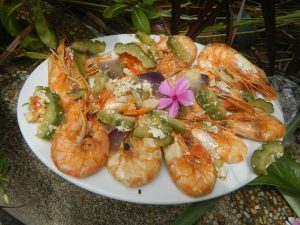
Kinilaw na Tuna: Filipino Citrus-Vinegar Tuna
 Recipe Guy

Filipino no-cook seafood | Tuna | Citrus vinegar
Kinilaw na tuna pairs cool cubes of fish with cane vinegar, calamansi, grated ginger, and sliced red onion. Cucumber adds crunch and optional coconut milk softens the dressing. This remains a raw-fish preparation, even when the acidic dressing changes the tuna's surface.
Before making it: kinilaw remains raw seafood. Supplier controls and cold handling reduce risk but cannot make it risk-free; vinegar and citrus are not a cooking or disinfection step.
Fresh From the Kitchen


About This Recipe
Make the dressing before cutting the chilled tuna so assembly stays brief. Thin onion slices and grated ginger distribute their sharpness through the vinegar and citrus, while one or two Thai chiles let you choose the stated range of heat.
Cold handling matters, but it does not remove the risks of raw seafood. Discuss the tuna's intended raw use and handling with the supplier. Pregnant people, children, older adults, and people with weakened immune systems should choose cooked seafood instead.
Cooking Notes
- Set the mixing bowl over ice rather than adding ice directly to the tuna. Meltwater would dilute the measured vinegar and calamansi dressing and wash away some seasoning.
- Cut the tuna into even, bite-size cubes and fold gently once dressed. Stirring vigorously breaks the edges, while small scraps firm differently from the larger pieces.
Ingredient Notes
For safety
Ask the fishmonger to identify the tuna species and confirm it was supplied for raw consumption with documented cold-chain handling and appropriate parasite controls, including commercial freezing where required. A marketing label such as sushi-grade is not itself proof of those controls. Keep tuna at 40 F or below during transport and preparation. Tuna can develop histamine if mishandled; later chilling, freezing or cooking will not remove histamine already formed. If the supplier cannot answer the handling questions, do not use that fish raw.
For texture
Dress the fish shortly before serving so it stays tender instead of chalky.
Kinilaw na Tuna Recipe
This is a raw-tuna appetizer, not a heat-cooked fish recipe. Acid changes texture but does not reliably eliminate pathogens or parasites. Pregnant people, children, older adults and immunocompromised people should avoid it and choose cooked seafood.
Shopping List
- tuna supplied for raw consumption with verified handling and parasite controls
- cane vinegar
- calamansi or lime
- ginger
- red onion
- Thai chiles
- cucumber
- coconut milk optional
- salt
- ice
Ingredients
Fish
- 1 pound tuna supplied for raw consumption with supplier-confirmed handling/parasite controls, kept at 40 F or below
- 1/2 teaspoon salt
- Ice for chilling the bowl
Dressing
- 1/3 cup cane vinegar
- 3 tablespoons calamansi or lime juice
- 1 tablespoon finely grated ginger
- 1 small red onion, thinly sliced
- 1 to 2 Thai chiles, sliced
Finish
- 1/2 cup diced cucumber
- 2 tablespoons coconut milk, optional
- Black pepper
- Calamansi wedges
Instructions
- Confirm the supplier controls described above before starting. Refrigerate tuna at 40 F or below until cutting; prepare the dressing first and set a clean mixing bowl over ice. Use clean, separate tools for ready-to-eat garnishes.
- Cut tuna into bite-size cubes with a very clean knife and board.
- Toss tuna with salt and let it sit for 5 minutes in the refrigerator.
- Stir together vinegar, calamansi, ginger, onion, and chiles.
- Pour dressing over the tuna and fold gently.
- Add cucumber and optional coconut milk just before serving.
- Serve immediately over ice or in small chilled portions. Do not taste raw fish to assess safety, and do not wait for an acid marinade to make it safe.
Nutrition Estimate
Approximate values per serving based on the listed ingredients and yield. Actual nutrition will vary by brand, exact portion size, and cooking changes.
Tips For The Best Kinilaw na Tuna
- Buy carefully: Only use fish meant to be eaten raw.
- Keep everything cold: Cold bowls and quick handling protect texture and safety.
- Dress late: Long soaking firms the tuna too much.
- Balance heat and acid: The dish should be sharp, fresh, and lively, not punishing.
How To Serve And Store
Serve immediately as a chilled appetizer or pulutan. Keep the bowl at 40 F or below over ice and discard served leftovers rather than saving them. Discard any batch left above refrigeration temperature for 2 hours in total, or 1 hour above 90 F; these are discard limits, not a promise that raw fish is safe until then.
Common Questions
Can I use frozen tuna?
Only if the supplier confirms the same raw-use handling and parasite controls. Thaw in the refrigerator according to the package directions. Freezing does not eliminate all harmful microbes or preformed histamine, and ordinary home freezing is not a substitute for documented supplier controls.
Can I cook the tuna first?
For a cooked variation, cook properly handled tuna to 145 F before cooling promptly under refrigeration and tossing with the dressing. It will have a firmer, flaky texture. Cooking does not rescue tuna that has been temperature-abused.
Is coconut milk traditional?
Some regional versions use it. Keep it optional.
Can I make it ahead?
Prep the dressing ahead, but cut and dress the fish close to serving.
Does soaking tuna in vinegar make it as safe as cooked fish?
No. Acid dressing is not a substitute for heat cooking, and marinating does not reliably eliminate seafood hazards. Treat the finished kinilaw as raw fish rather than assuming a firmer, paler surface means it is cooked.
When should I add the cucumber and coconut milk?
Fold them in just before serving, after the tuna has been dressed. The cucumber keeps a clearer crunch that way, and the optional two tablespoons of coconut milk can soften the dressing without obscuring the ginger and citrus.
Do you like kinilaw clean and sharp or softened with coconut milk? Share your family version or testing notes in the comments.
Recipe inspiration and technique reference: Filipino home-cooking source research from Panlasang Pinoy, Kawaling Pinoy, and Filipino-American cooking sources in the site roadmap.
Technique and food-safety references: fda.gov; fda.gov; fda.gov.