Filipino Siomai Six Ways
 Recipe Guy
Filipino | Party and Potluck | Merienda and Bakery
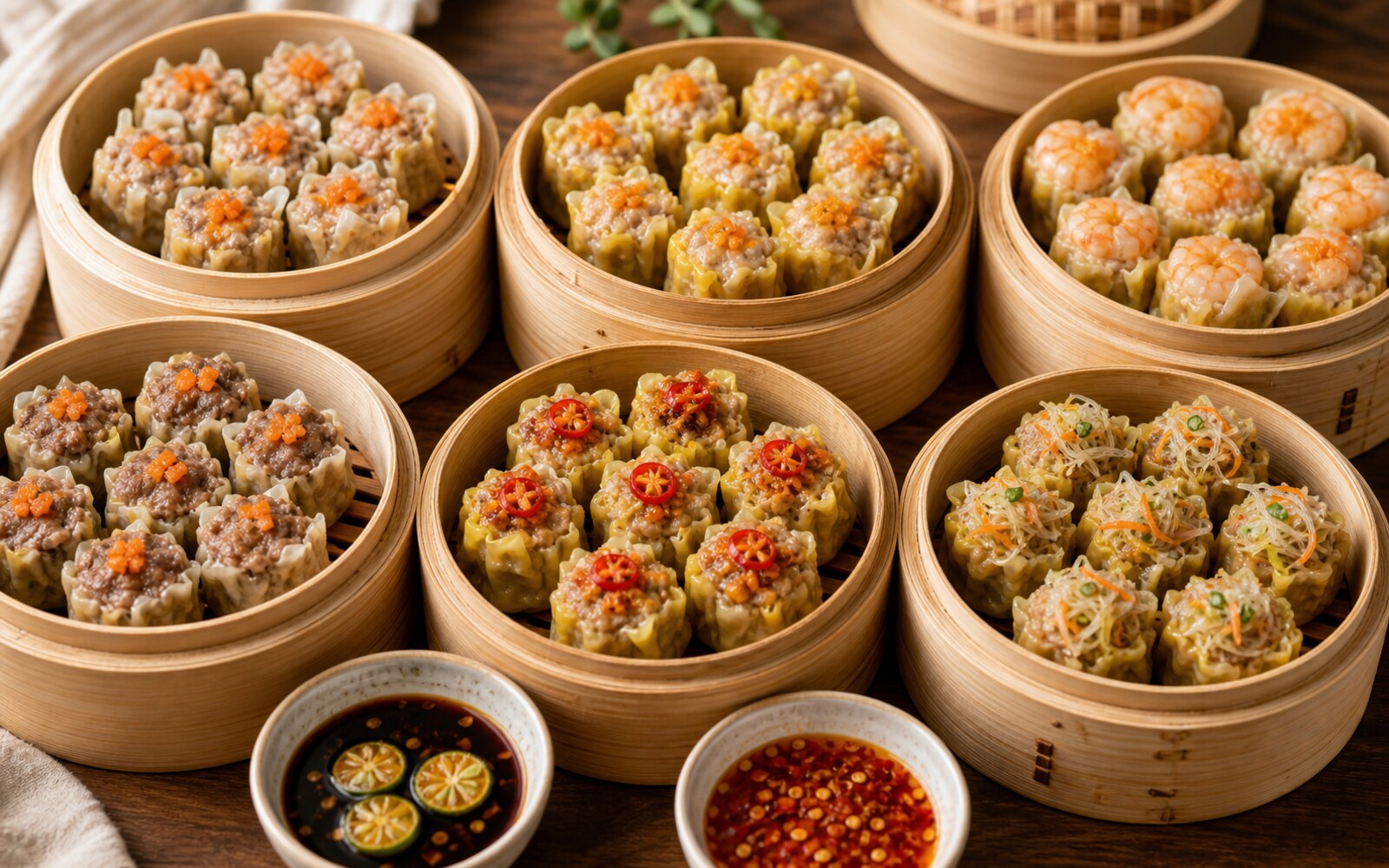
Good siomai filling holds together without becoming a solid plug inside the wrapper. This guide starts with seasoned ground pork or chicken, finely minced vegetables, and open-top shaping, then branches into shrimp, beef, spicy, and noodle-vegetable ideas that need their own attention to proportion.
About This Recipe
The measured base below keeps a pound of ground pork or chicken with carrot, onion, garlic, soy sauce, oyster sauce and sesame oil. It makes about 30 open-top siomai. Mix until tacky and mince vegetables finely so the filling holds together without large pieces pulling the wrapper apart.
Choose one filling path. The shrimp-pork option adds half a pound of shrimp and makes about 40 pieces at the same filling size. Pork, chicken, beef and spicy use the measured meat base; noodle-vegetable has its own complete meatless filling below, with no meat or regular oyster sauce.
Cooking Notes
- Cook a small sample of the filling before wrapping the batch. This lets you assess the soy and oyster sauce seasoning while there is still room to change the mixture.
- Leave small gaps between dumplings in the lined steamer. Wrappers that touch can stick together, making otherwise well-shaped siomai tear when you lift them out.
Ingredient Notes
Filling texture
Mix the raw meat fillings until tacky. The separate noodle-vegetable filling binds through its cooked cornstarch mixture; do not expect vegetables to become sticky like ground meat.
Wrappers
Keep wrappers covered with a damp towel while working.
Siomai Base Recipe and Six Filling Paths
The base is a complete pork-or-chicken recipe. Choose a single variation below; do not combine all proteins. For another complete pork preparation, see Pork Siomai with Calamansi Soy.
Shopping List
- ground pork or chicken for the base
- carrot, onion and garlic
- soy sauce, oyster sauce and sesame oil
- salt and pepper
- 3-inch siomai or wonton wrappers
- calamansi and chili garlic oil for serving
- shrimp, ground beef or chili garlic sauce only for the selected variation
- parchment for the steamer
- for noodle-vegetable only: extra-firm tofu, mung-bean glass noodles, cabbage, mushrooms, carrot, onion, garlic, neutral oil, soy sauce, vegetarian mushroom sauce, sesame oil and cornstarch
Ingredients
Base Filling: About 30 Siomai
- 1 pound ground pork or ground chicken
- 1/2 cup finely minced carrot
- 1/2 cup finely minced onion
- 3 garlic cloves, minced
- 2 tablespoons soy sauce
- 1 tablespoon oyster sauce
- 1 teaspoon sesame oil
- Salt and pepper to taste after cooking a sample
Wrapping and Serving
- 30 siomai wrappers, about 3 inches across, plus a few spare wrappers if the filling needs smaller portions
- Perforated parchment for lining the steamer
- Soy sauce, calamansi and chili garlic oil, served separately to taste
Variation Paths
- Pork: Use the 1 pound ground pork in the base. Makes about 30.
- Chicken: Replace the pork with 1 pound ground chicken, not an additional pound. Makes about 30; use the poultry endpoint below.
- Shrimp-Pork: Use the pork base and add 1/2 pound peeled, deveined shrimp, minced and patted dry. Have about 40 wrappers plus spares, rather than only 30; portion the larger batch into about 40 pieces of the same size.
- Beef: Replace the pork with 1 pound ground beef; keep the onion at the base recipe's measured 1/2 cup. Makes about 30.
- Spicy: Stir 1 tablespoon chili garlic sauce into one batch of pork or chicken filling. This is a seasoning option, not another protein batch. Makes about 30; keep extra chile sauce at the table.
- Noodle Vegetable: Use only the separate measured filling below, not the meat base. It makes about 30 open-top dumplings and contains no meat, seafood or regular oyster sauce.
Instructions for the Measured Meat Fillings
- Combine the selected ground meat with the measured minced vegetables and seasonings. Add shrimp or the measured chili sauce only for that chosen variation. Stir until the filling is tacky; keep it refrigerated when not working with it.
- Cook a small sample to the same temperature required for the finished filling: at least 160 F for pork or beef, 165 F for chicken or any chicken mixture. Taste the cooked sample before adding optional salt or pepper; never taste raw filling.
- Divide the base filling into about 30 equal portions, or the shrimp-pork filling into about 40. Aim for roughly 22 g filling per 3-inch wrapper, about a heaped tablespoon. If a wrapper cannot enclose that amount, make smaller dumplings with spare wrappers and expect a higher count; do not overfill to force a fixed yield.
- Gather the wrapper around the filling with the top open and flatten the base. Keep unused wrappers covered. Line the steamer with perforated parchment and leave gaps between dumplings.
- Bring the steamer water to a boil below the rack. Cover and steam in batches for about 15 to 20 minutes, replenishing water as needed. Check several large centers with a thin-tip thermometer: pork, beef and shrimp-pork filling must reach 160 F; chicken or any chicken-containing filling must reach 165 F. Continue if necessary; firmness alone is not the test.
- Serve hot with the separate soy sauce, calamansi and chili garlic oil. Keep cooked batches at 140 F or above while finishing, or refrigerate promptly.
Noodle-Vegetable Siomai: Separate Meatless Batch
This open-top adaptation combines the cooked tofu-and-starch binding approach in Jeeca's tofu and mushroom siomai with the drained noodle-and-vegetable filling approach in George's vegan mandu. Use the complete quantities and open-top method here; the linked recipes are separate preparations.
Ingredients for About 30 Noodle-Vegetable Siomai
- 300 g extra-firm tofu, weighed after draining its package, then pressed and crumbled
- 25 g dry mung-bean glass noodles
- 150 g finely chopped cabbage
- 100 g fresh mushrooms, finely chopped
- 50 g grated carrot
- 50 g finely minced onion
- 2 garlic cloves, minced
- 1 tablespoon neutral oil
- 1 tablespoon soy sauce
- 1 tablespoon vegetarian mushroom stir-fry sauce, not oyster sauce containing shellfish
- 1 teaspoon sesame oil
- 1/4 teaspoon ground pepper
- 2 tablespoons cornstarch mixed with 2 tablespoons water
- 30 wrappers, about 3 inches across, plus spares; use egg-free wrappers for vegan siomai
- Perforated parchment for the steamer
Noodle-Vegetable Method
- Cook the noodles according to their package until tender, drain thoroughly, and cut into pieces shorter than 1/2 inch. Press excess moisture from the drained tofu.
- Heat the neutral oil in a large skillet over medium heat. Cook onion and garlic for 2 minutes. Add cabbage, mushrooms and carrot; cook 5 to 8 minutes, stirring, until tender and any released liquid has evaporated.
- Mix in tofu, noodles, soy sauce, vegetarian mushroom sauce, sesame oil and pepper. Stir the cornstarch slurry again, add it, and cook, stirring, for about 2 minutes until the filling binds with no watery liquid. Spread in a shallow dish and cool just until comfortable to handle; refrigerate promptly if not wrapping immediately.
- Use about 20 g filling per wrapper, pressing it into an open-top pouch with a flat base. Expect about 30; use extra wrappers if needed rather than overfilling. Keep wrapped dumplings and unused wrappers covered.
- Space dumplings on perforated parchment over boiling steamer water. Cover and steam about 12 to 15 minutes, until wrappers are tender with no dry floury patches and filling reaches 165 F. Serve with the same separate soy-calamansi and chili garlic accompaniments, choosing vegetarian products.
Nutrition by Filling
This is a collection of alternatives, not one combined recipe. A single calorie or nutrient total would be misleading. Use the ingredient quantities, yield and nutrition estimate for the individual recipe you choose; its estimate does not include every variation, optional topping, sauce or side dish. Recipe-specific references: Pork Siomai with Calamansi Soy.
Tips For The Best Filipino Siomai Six Ways
- Do not overfill: Overfilled siomai burst or cook unevenly.
- Line the steamer: Parchment or cabbage leaves prevent sticking.
- Test seasoning: A tiny cooked patty prevents bland filling.
- Serve immediately: Siomai is best hot from the steamer.
How To Serve And Store
Serve with rice or as merienda. Refrigerate cooked siomai within 2 hours and use within 3 to 4 days at 40 F or below. Freeze raw shaped meat siomai promptly on a tray, then package airtight for up to 2 months for quality; steam from frozen until the same filling-specific temperature is reached, allowing extra time.
Common Questions
Can I freeze siomai?
Yes. Freeze shaped dumplings, then steam from frozen a little longer.
Can I fry them?
The measured formulas here are written for steaming. Frying needs its own oil-temperature, cooking-time and filling-temperature directions; do not treat browned wrappers as proof that a raw meat filling is done.
Can I use wonton wrappers?
Yes, if siomai wrappers are unavailable.
How do I know they are done?
Use a thermometer in the center: 160 F for pork, beef or shrimp-pork; 165 F for chicken, any chicken-containing filling, or the precooked noodle-vegetable filling. Firmness and wrapper appearance alone are not enough.
How do I check whether pork or chicken siomai is cooked?
Check the center with a food thermometer rather than relying on firmness. Ground pork needs 160 F, and ground chicken needs 165 F; any filling containing chicken should meet the poultry temperature.
Is the noodle-vegetable siomai option meatless as written?
Yes. The separate noodle-vegetable formula replaces the entire meat filling; it does not add noodles to pork or chicken. It uses weighed tofu, noodles and vegetables, vegetarian mushroom sauce and a cooked cornstarch binder. Use egg-free wrappers and vegetarian condiments when serving it as vegan.

Technique and food-safety references: kawalingpinoy.com; ask.fsis.usda.gov; thefoodietakesflight.com; myeclecticbites.com.