Corned Beef Caldereta
 Recipe Guy

Filipino | Weeknight Dinner | Comfort Food
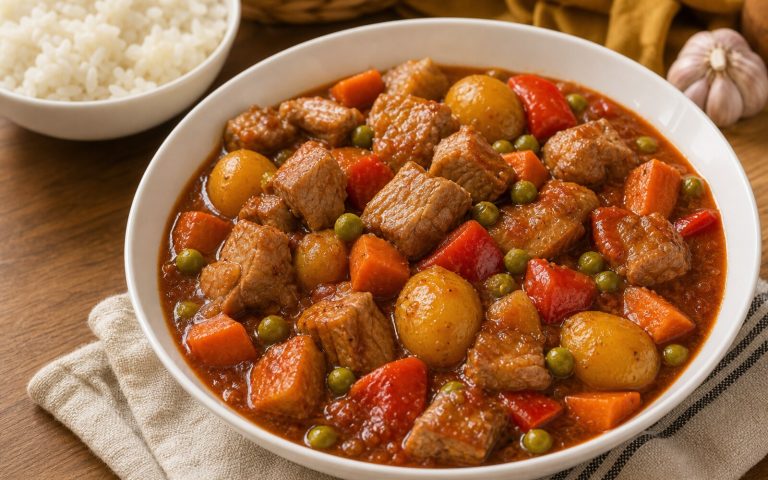
Canned corned beef makes this caldereta-style skillet quick, but the potatoes and carrots still need their own head start. Tomato sauce gathers everything together, and a small handful of cheese melts in at the end to make the sauce richer.
About This Recipe
This is a pantry corned-beef saute, not a long beef braise. Pan-frying the diced vegetables first gives them time to become nearly tender before they meet the tomato sauce. Their browned edges also provide some contrast to the softer canned meat.
The corned beef cooks separately with onion and garlic until it loosens and begins to color. A modest amount of water or broth keeps the sauce spoonable without making it soupy. Cheese finishes the pan, so judge the saltiness after that final ingredient is incorporated.
Cooking Notes
- Cut the potatoes and carrots into similarly small dice, and check their centers before removing them from the skillet. They should be almost tender, not merely browned on the outside.
- Let the corned beef sizzle before adding tomato sauce. Stirring in liquid immediately skips the chance to develop browned edges and leaves a softer, more uniform texture.
Ingredient Notes
Corned beef
Use a firmer canned corned beef if you want visible pieces instead of a soft hash texture.
Vegetables
Frying the potatoes and carrots first keeps them from falling apart in the tomato sauce.
Corned Beef Caldereta Recipe
A fast pantry caldereta-style corned beef saute with potatoes, carrots, tomato sauce, peppers, and cheese.
Shopping List
- canned corned beef
- potatoes
- carrots
- red bell pepper
- onion
- garlic
- tomato sauce
- grated cheese
- cooking oil
- salt
- black pepper
Ingredients
Main Ingredients
- 1 can corned beef, 11 to 12 ounces
- 2 medium potatoes, diced
- 1 large carrot, diced
- 1 red bell pepper, diced
- 1 small onion, chopped
- 4 garlic cloves, minced
Sauce
- 1/2 cup tomato sauce
- 1/4 cup water or beef broth
- 1/2 teaspoon sugar, optional
- Salt and black pepper to taste
Finish
- 1/3 cup grated cheddar or quick-melt cheese
- 2 tablespoons neutral oil
- Steamed rice, for serving
Instructions
- Heat oil in a wide skillet and pan-fry the potatoes and carrots until lightly browned and almost tender.
- Add bell pepper for 30 seconds, then transfer the vegetables to a plate.
- In the same skillet, saute onion until soft, then add garlic and cook until fragrant.
- Add corned beef and cook until it loosens, sizzles, and browns lightly at the edges.
- Stir in tomato sauce, water, and sugar if using.
- Simmer until saucy but not watery, then season with salt and pepper.
- Fold the potatoes, carrots, and bell pepper back into the pan.
- Sprinkle in cheese, stir until just melted, and serve hot with rice.
Nutrition Estimate
Approximate values per serving based on the listed ingredients and yield. Actual nutrition will vary by brand, exact portion size, and cooking changes.
Tips For The Best Corned Beef Caldereta
- Keep it saucy: Add only a small splash of water because corned beef releases fat and moisture.
- Add cheese last: Cheese thickens the sauce quickly and can stick if boiled too long.
- Cut evenly: Small even dice cook faster and look better on rice.
- Balance salt: Taste before salting because canned corned beef varies.
How To Serve And Store
Serve with steamed white rice and a fried egg if you want a heavier breakfast-style plate. Refrigerate leftovers up to 3 days.
Common Questions
Can I use fresh beef?
This version is built for canned corned beef. Fresh beef needs a longer caldereta method.
Can I add peas?
Yes. Add frozen peas with the bell pepper near the end.
Is this spicy?
Not by default. Add chopped chile or hot sauce if desired.
Can fresh cubed beef replace the canned corned beef?
Not with this short skillet method. Fresh beef needs a different cooking schedule to become tender, while this recipe is built around cooked canned meat and vegetables that are nearly ready before combining.
When should I add cheese to corned beef caldereta?
Fold the vegetables back into the reduced tomato sauce first, then stir in the cheese just until it melts. Adding it earlier can leave it catching on the pan during further simmering.