Laing: Filipino Coconut Greens with Chiles
 Recipe Guy
Bicolano classic | Coconut greens | Spicy side
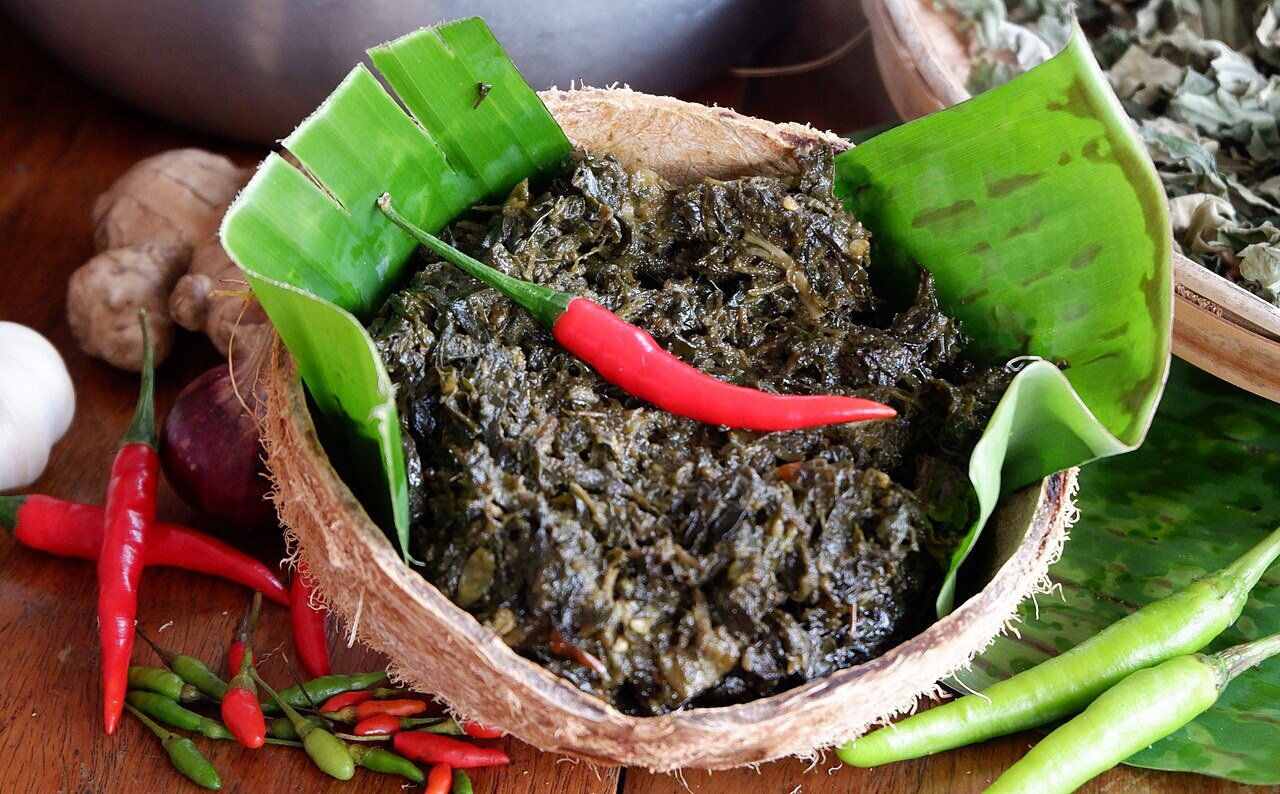
Dried taro leaves become the center of this laing as they soften in coconut milk seasoned with ginger, garlic, and bagoong. Coconut cream makes the finish richer, while Thai chiles bring heat to greens that are substantial enough to eat with rice.
Why make it: This version explains taro leaf safety and gives careful U.S. shopping notes without pretending spinach is the exact same dish.
Fresh From the Kitchen
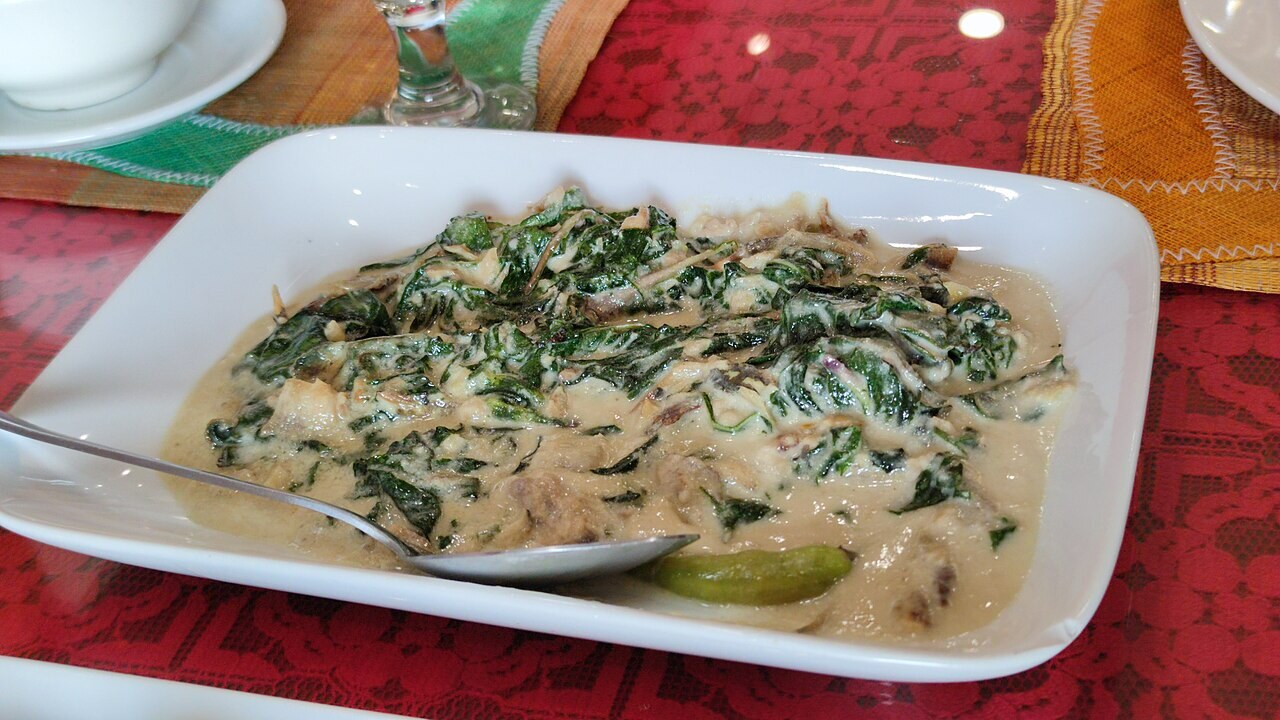
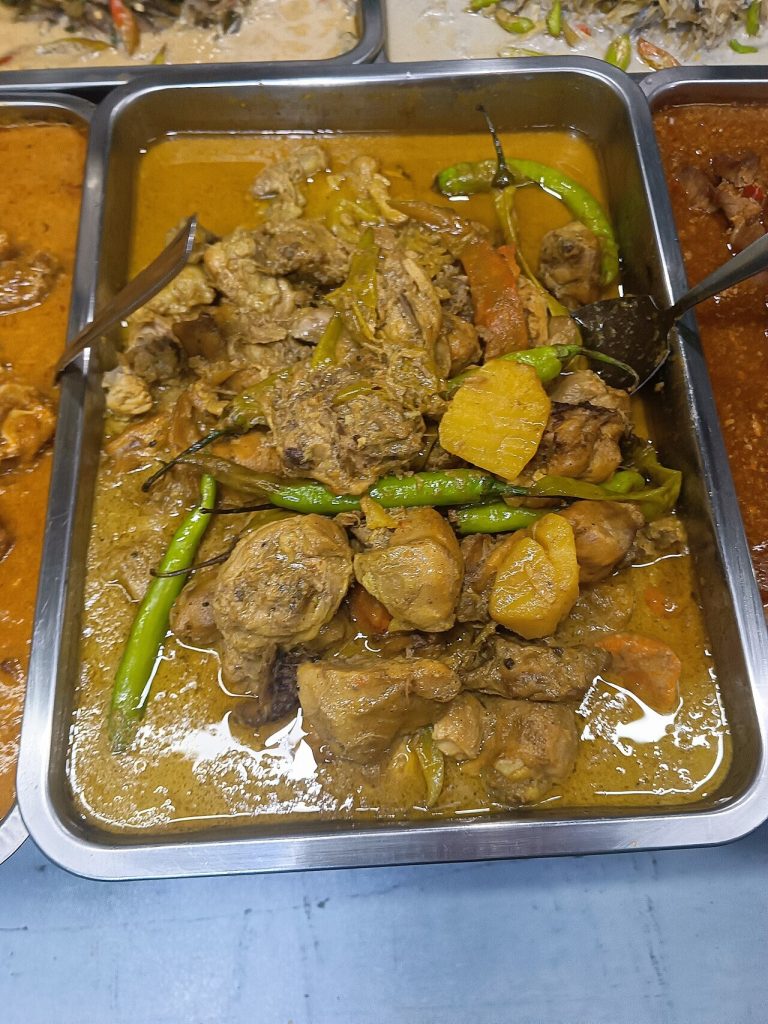
These photos show the colors, textures, and serving style to look for when making Laing.
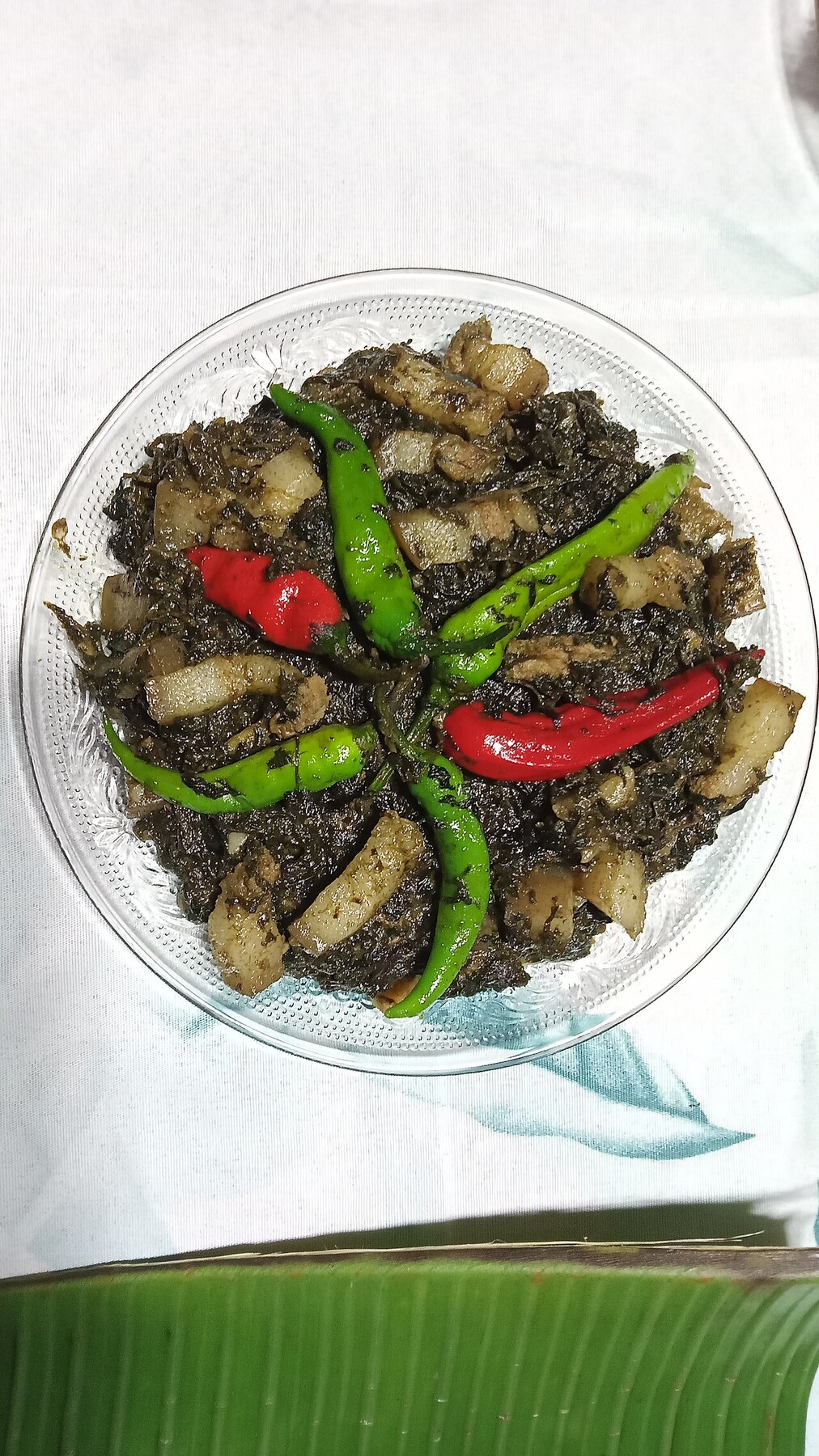
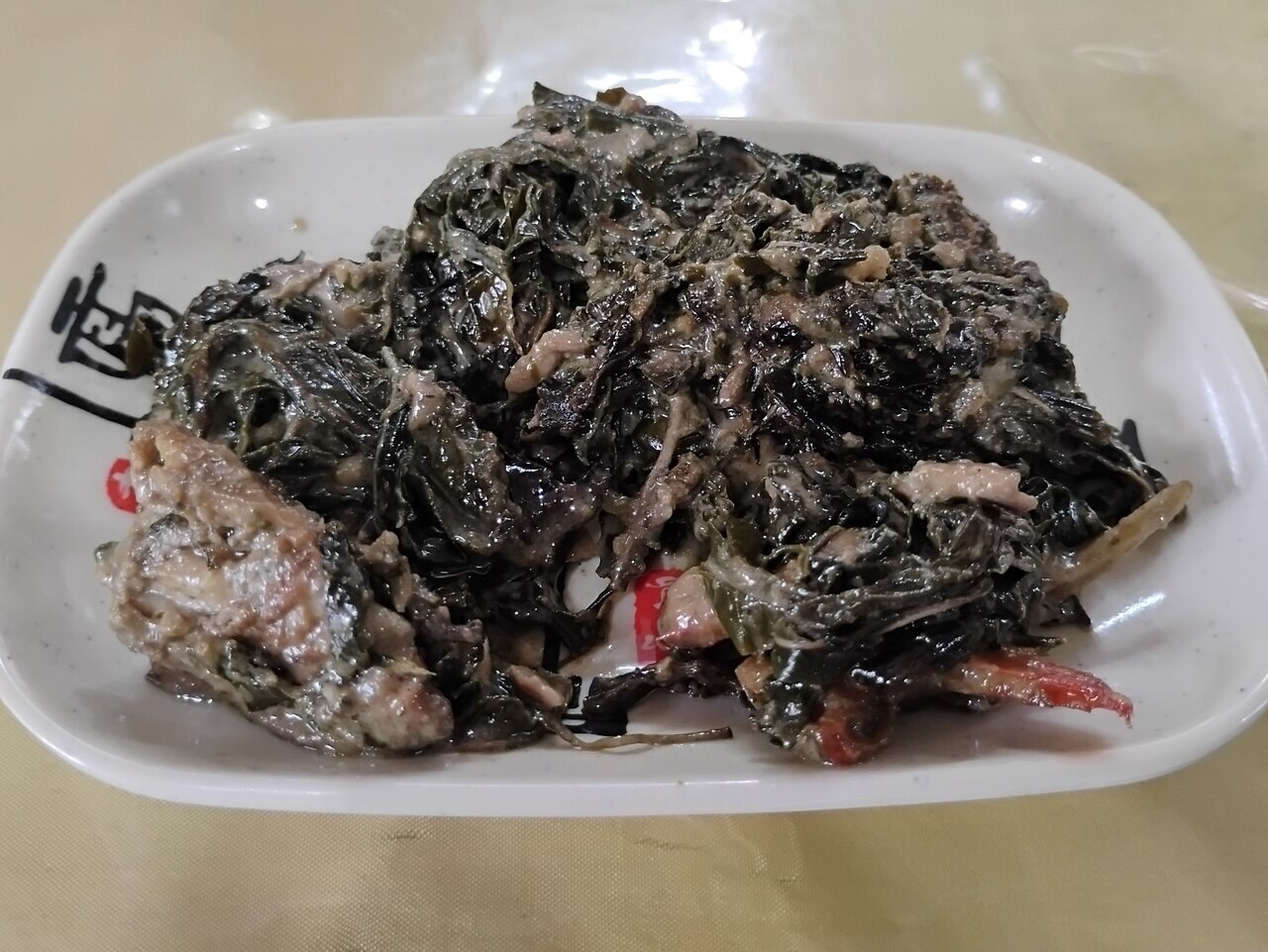
About This Recipe
The two coconut ingredients have separate jobs. Coconut milk is the cooking liquid for the dried leaves; the cream goes in later, after the leaves have hydrated. Bagoong contributes a concentrated salty flavor, with pork belly or dried shrimp offered as optional additions.
Give the leaves room to soften before handling them much, and maintain the gentle simmer called for here. The finished mixture should be thick enough to mound on rice, with tender greens throughout rather than dry leaves trapped above the coconut liquid.
Cooking Notes
- Choose packaged edible dried taro leaves from a reputable food seller. Do not substitute foraged taro-like leaves; identifying an edible plant is not something a longer simmer can replace.
- Use three chiles for the lower end of the listed heat range and five for more heat. Keep the optional extra chiles separate so the entire pot does not need to be equally fiery.
Ingredient Notes
For taro leaves
Use dried taro leaves from a trusted Filipino market and cook thoroughly; undercooked taro leaves can irritate.
For the coconut
Coconut milk cooks the leaves; coconut cream at the end makes the sauce lush.
Laing Recipe
This version explains taro leaf safety and gives careful U.S. shopping notes without pretending spinach is the exact same dish.
Shopping List
- dried taro leaves
- coconut milk: two 400-ml cans (800 ml total)
- coconut cream
- ginger
- garlic
- onion
- chiles
- bagoong
- pork or dried shrimp optional
- rice
Ingredients
Coconut Base
- 800 ml full-fat coconut milk (two 400-ml cans)
- 1 cup water, plus more in 1/4-cup additions if needed
- 1 onion, sliced
- 5 garlic cloves, minced
- 2 tablespoons ginger, sliced
- 2 tablespoons bagoong
- 4 ounces pork belly, thinly sliced, OR 4 ounces dried shrimp, optional; use one, not both
Greens and Heat
- 4 ounces dried taro leaves
- 3 to 5 Thai chiles
- 1 cup coconut cream
For Serving
- Steamed rice
- Extra chiles, optional
Instructions
- Inspect the packaged edible dried taro leaves and follow any preparation/cooking directions on their label. If using dried shrimp, rinse, soak in warm water for about 10 minutes or as the package directs, and drain.
- Combine 800 ml coconut milk, 1 cup water, onion, garlic, ginger, and bagoong in a wide, heavy pot. Add either the optional thinly sliced pork or the drained dried shrimp at this stage.
- Bring to a gentle simmer. Add dried taro leaves in handfuls, allowing them to wilt and gently pressing them into the liquid. Keep all leaves moistened; leaving dry leaves above the liquid does not cook them.
- Cover loosely and simmer gently for about 35 to 45 minutes. Once hydrated, turn gently as needed so the leaves cook evenly. If the bottom begins to dry while leaves are still firm, add hot water in 1/4-cup increments.
- Add chiles and the separate 1 cup coconut cream. Simmer another 10 to 15 minutes or longer as required by the leaf package, until all leaves are thoroughly tender and the sauce is thick. Do not use a taste of raw or partly cooked leaves to check doneness.
- If using pork, confirm it is fully cooked before resting. Rest the finished laing 10 minutes and serve with rice. Gentle stirring is a texture choice, not a substitute for adequate cooking.
Nutrition Estimate
Approximate nutrition for 1 serving (one-sixth of the coconut greens). Includes all coconut sauce, dried taro leaves and 32 g sauteed shrimp paste. Optional pork or dried shrimp and rice are excluded. Calculated from published food data, not laboratory tested; brands and portions vary.
Tips For The Best Laing
- Cook thoroughly: Taro leaves need enough time to become safe and pleasant.
- Keep the simmer gentle: Coconut can break if boiled hard.
- Do not rush the sauce: Laing tastes best when the leaves fully absorb coconut.
- Adjust heat: Use fewer chiles for a gentler version.
How To Serve And Store
Serve with rice and fried fish, grilled pork, or vegetables. Refrigerate promptly in shallow containers, use within 3 days, and reheat to 165 F.
Common Questions
Can I use fresh taro leaves?
This method is for packaged edible dried taro leaves. Fresh leaves need a different preparation and cooking method; do not substitute them here or use foraged taro-like leaves.
Can I use spinach?
Spinach makes a coconut greens dish, but it is not the same texture as laing.
Is laing always spicy?
It is often spicy, but you can control the chiles.
Can I make it vegetarian?
Use a vegetarian salty seasoning in place of bagoong.
When should I add the coconut cream to laing?
Add it after the leaves have hydrated in the coconut milk, along with the chiles. The cream enriches the finish; adding it later lets you judge the leaves separately from the final sauce thickness.
Can I make this laing without pork belly or dried shrimp?
Yes, both additions are optional in this version. Keep the bagoong, aromatics, coconut milk, and coconut cream as listed. Omitting the extra meat or shrimp does not make the dish vegetarian if the bagoong contains seafood.
How spicy do you like laing? Share your family version or testing notes in the comments.
Recipe inspiration and technique reference: Filipino home-cooking source research from Panlasang Pinoy, Kawaling Pinoy, and Filipino-American cooking sources in the site roadmap.
Technique and food-safety references: pinoybites.com; kawalingpinoy.com.